ENVI vote on medical devices regulation proposal postponed until September

drb2

We will have a “swift” procedure in ENVI – not

Here’s some EU legislative procedure fun: do you know the joke about the European Parliament committee that was going to compromise to have an unproblematic vote? – It didn’t!

Well, that was a silly lawyer joke to make as a segue to inform you that the ENVI committee is not going to vote on the huge pile of amendments to the medical devices regulation proposal on 10 July. Seriously, ENVI has postponed the vote until 18 September. This means that the plenary vote will move to November, the month in which it was scheduled by mistake initially before the date was corrected to September.

So why was the vote postponed? With the ENVI committee in full blackbox mode seeking compromises among itself to arrive at an unproblematic vote we can only guess. It seems that the fact free politics of Mrs Roth-Behrendt (the rapporteur that proposed stricter pre-market controls to remedy post-market problems) have caught up with her and compromises turned out not that easy to reach. Apparently cooler and more rational minds are starting to prevail in ENVI and realize solving market surveillance issues with premarket controls is too simplistic to be realistic. But, since the inner workings of ENVI are not public, I am giving you my best guess.

What is happening to the IVD proposal of rapporteur Liese? As far as I know this is still scheduled for a 10 July vote, although it has the same problematic stuff on PMA based on noveltly as criterion in it. It would be really strange if ENVI would abandon PMA in general devices but keep it in IVDs. The two proposals are very intertwined. The logical thing to happen would be that ENVI postpones the IVD proposal vote too.

Biting off more than a committee can chew seems to be en vogue these days in EU legislation that stands to cause major collateral damage in healthcare, like the General Data Protection Regulation (see here for explanation). After being faced with a whopping 3000+ amendments the LIBE committee also did not meet its vote deadline of 28 May, as well as a number of earlier deadlines, and as per today no new vote date was set.

We are now facing a summer of suspense about how the ENVI blackbox will fare compromise wise. Also, Mrs. Roth-Behrendt might not make it European Ombudsman as she is hoping to (she did not get a majority in the first round of votes in Parliament today), which means that she may be around for longer to help create uncontroversial quality legislation for the medical devices industry.

IMDRF invites comments on standalone software key definitions

IMDRF logoAs announced, the IMDRF is on the case for software, which shows how important this subject is becoming in the medical devices field. I  notice this everyday in my medical devices practice, as more and more medical devices software work comes in. That is great for me, as I grew up around software engineers in aerospace and agriculture and picked up a lot about software engineering on the way. It is also important, because software plays a more and more important role as medical device in its own right.

IMDRF has just released a proposed document by the International Medical Device Regulators Forum (IMDRF) Standalone Medical Device Software Working Group on Standalone Medical Device Software: Key Definitions and invites comments on the document. Let me tell you right from the start that if you are a company or association of companies with international interests in medical devices software, this is too important to ignore.

Intention of the document

The document is the start of a bigger initiative of the IMDRF because it

” identifies key definitions starting with a common definition for  “standalone medical device software.” These definitions are intended to serve as a foundation for further IMDRF work (identifying a risk framework and controls needed to address risks) to be conducted by this workgroup.”

For that reason, medical devices companies with an interest in software are well advised to take a look and decide if they like what they see, because the outcome of this exercise will set the goalposts for future IMDRF initiatives. But, mind you, so far we are only talking definitions. However, they do define the scope of any rules using them so the very foundation of future regulation.

SMDS

The term “standalone medical device software” (SMDS) is defined as

“software intended to be used for one or more medical purposes and is able to perform its medical purpose without being embedded in a hardware medical device or being dependent on specific or proprietary medical purpose hardware.”.

This is a significantly richer definition than currently in the EU MEDDEV 2.1/6 on stand alone software (“which is not incorporated in a medical device at the time of its placing on the market or its making available”).

Computing platforms

The proposal for the medical devices regulation contains a reference to ‘mobile computing platforms’ in the design requirements (14.3), which was left alone in all the amendments craziness currently going on. The IMDRF document defines ‘computing platforms’ as to

“include hardware and software resources (e.g. operating system,  processing hardware, storage, software libraries, displays, input devices, etc.).”,

which tells us more about what is intended there, and specifically that a computing platform is not only hardware. That is certainly not evident from the text of the medical devices regulation proposal, which only refers to design features related to hardware. Companies will have to make up their mind if they agree with this open ended definition that also includes software.

The nested functional description of “operating system” (“may be running on a server, a workstation, a mobile platform, embedded system or other general purpose hardware platform”) may cause some demarcation problems because it refers to embedded systems to run on, while we in Europe would be quick to consider anything running on a embedded system in a device as not standalone. We would consider “software which is not incorporated in a medical device at the time of its placing on the market or its making available” as not standalone as per the definition of standalone software in MEDDEV 2.1/6.

Modularisation

The document explicitly allows for modularisation by stating that SMDS

“may be used in combination (e.g., as a module) with other devices”

and that

“software that meets the definition of SMDS and is part of another software, regardless if the other software has a medical purpose or not, is still considered as a SMDS (i.e. medical device)”

This would seem to fit the EU thinking of modularization set out in the MEDDEV, which allows this too. The document can help the US make a nice step in modularization, because this is an area where the EU has so far been a lot more flexible. This will make a lot of companies with SMDS in the EU and US simultaneously very happy.

Medical purpose

The medical purpose runs roughly along the lines of the GHTF medical device definition, but:

“For SMDS, the following purposes are specifically excluded as medical purpose for software since these purposes are not foreseen for software:

– disinfection of medical devices

– devices for in-vitro fertilization or assisted reproduction technologies”

I am not so sure that IVF devices or assisted reproduction technologies should be completely excluded for software. For example, I could envisage software used for screening embryos for IVF purposes or diagnostic interpretation of raw data for assisted reproduction purposes.

Software changes

The term “software change” is defined as “any change made to software currently used or marketed for  purposes that include corrective or adaptive purposes, or for change in functionality.” These changes would be seen as changes relevant for regulatory purposes, e.g. triggering the need to go back to the authorities or notified body to have design changes reviewed. The document contains non-limitative list of  helpful examples of the kind of changes IMDRF is thinking about:

  • changes associated with defect fixes, aesthetics, usability enhancements, security patches or  operating efficiency’
  • changes affecting the software’s original performance, safety and effectiveness, and/or  intended use / purpose;
  • changes to mitigate new risk(s) not previously identified, or change the probability that   existing hazard(s) will  occur;
  • changes to adapt the software to new and / or different computing platforms (e.g., from an on-site server to an off-site “cloud” server.)

You can love or hate these examples, but that’s what the invitation to comment is for. Now is the time!

Manufacturer

The document clarifies that a manufacturer of SMDS is manufacturer whether or not such a SMDS is designed and/or manufactured by that person himself or on his behalf by another person(s), which, again, is already firmly embedded in EU law, so no surprises there so far.

Intended purpose

The document frames our EU “intended purpose” as the

“objective intent of the manufacturer regarding the use of a product, process, or service as reflected in the specifications, instructions,  and other information provided by the manufacturer.”

which is similar to what EU law already provides with

“materials such as sales and marketing materials expressed by the manufacturer is considered  as “information provided by the manufacturer” and  therefore reflects the objective intent of  the manufacturer.”

What is missing / first impression

My first impression is that he document is a very useful starting point, with some ifs and buts. But I understand that if you engage in international harmonization, you can’t always please everyone.

However, I really miss a discussion of the concept of accessory. This concept is completely missing in the document and is also a defined concept of the GHTF. This can mean that IMDRF (a) totally forgot about it (unlikely), (b) considers it not applicable to SMDS (in that case they would have probably said so) or (c) considers it politically sensitive (most likely because of the FDA’s difficult history with accessories in medical devices law). Another explanation is that the IMDRF considers the concept of accessory completely clear if the scope of the concept of medical device is clear. Anyway, I think the document cannot ignore accessories and their role in medical software given the important role that they play in EU medical devices law, just look at the MEDDEV and the Swedish Document Reloaded. Indeed, under EU law medical devices and accessories are mutually exclusive, but regulated similarly.

This is particularly relevant since the document uses the term “device” here and there (for example with respect to modules), and EU medical devices law defines “device” as to include both ‘medical device’ and ‘accessory’. For EU purposes this would also need to be cleared up, because without a discussion of how to apply the accessory concept to SMDS this document is not very useful starting material for EU purposes.

In addition, some discussion about how the definition of SMDS would play out in IVDs would also be very useful, as we Europeans introduced the concept of “expert function software” in this context (“For the purpose of this document, the ‘expert function software’ means software which is able to analyse existing information to generate new specific information according to the intended use of the software.”) and guidance or examples of SMDS in IVD regulated scope would be very useful indeed.

Deadline

The deadline for comments inconveniently coincides with most people’s summer holidays, because comments are due by 30 August. While this is perhaps not very convenient for those leaving on holiday, it will give the IMDRF the opportunity to digest the comments with a view to its Brussels meeting from 12 to 14 November this year. So let’s engage. What do you think about this?
EU member states show some of their cards on medical devices revision

380px-EU_Consilium_Logo.svgThe EU member states have so far been the dark horse in the discussions surrounding the revision of the EU medical devices directives, keeping their cards close to their chest and not getting involved in the largely fact free politics surrounding the ENVI rapporteurs’ drafts for the medical devices and IVD regulations.

Council of Employment, Social Policy and Health Ministers

With the Council of Employment, Social Policy and Health Ministers today and yesterday in Luxembourg it has just become a lot more transparent where the member states are on the revision. On the occasion of that council meeting the Presidency presented Progress Reports on the clinical trials proposal and the medical devices package.

Progress report

The progress report for the medical devices package and its corrigendum show that the council has been doing a lot of preparatory work behind the scenes and has had a lot of meetings in committees already. This is why I think that this rather summary progress report shows only some of the Council’s cards, but not all by a long stretch. The facts that basically all council delegations have entered scrutiny reservations shows that they consider this no small matter and that they reserve the right to phone home and get support on a national basis. In practice however this rarely seriously hampers progress of EU legislation and it is expected it won’t in this case either.

Cards of the Council

What is the Council willing to show so far? Let’s take a look at the points in the progress reports:

  1. No splitting up of the regulations and no watering down to directives – this shows that the member states are serious about a more unitary medical devices market in the EU.
  2. The delegations think quite differently about the scrutiny mechanism proposed by the Commission and don’t even address the PMA proposal put forward by Mrs. Roth-Behrendt, which may well mean the member states appreciate that proposal as the political overshooting that the rapporteur itself admitted that it is.
  3. With respect to notified body oversight “the division of responsibilities between Member States and the Commission in designating a notified body remains to be clarified”, i.e. “we don’t like the Commission’s peer review of member states’ plans to accredit notified bodies”. Big surprise that they are critical about this (not) because they are handing over sovereignty. However, it does show that member states seem  willing to resolve an important weakness in EU medical devices law: member state oversight of the notified bodies.
  4. The member states like the IVD regulation proposal’s adoption of the GHTF classification methodology for IVDs. To be expected, because the GHTF did not decide things that its state members did not like very much.
  5. Regarding clinical investigations for medical devices the member states are generally not happy with the short deadlines and silent approval for certain trials if the member states don’t act. Not surprising as well, because member states typically don’t like it if Europe is telling them to get a move on in the interest of the internal market.

The Council itself stated in its press release following the meeting on 21 June (p. 23):

“In its examination of the proposals the Council’s working party on pharmaceuticals and medical devices has so far identified the following main difficulties:

· the procedures for clinical evaluation;

· the method for strengthened control by notified bodies.”

Does that mean that they the council does not consider scrutiny a problem after all? Or that it considers it an issue it think it will be able to compromise on no matter what? Out of the three points of controversy in the progress report mentioned above this is the only one not mentioned as “main difficulty”.

Known knowns and known unknowns and a look in the crystal ball

With that, we still don’t know very much except some very cautious open ended support for the Commission’s proposal. We do know that the member states still have a lot of details to discuss with each other and with the Parliament. In so far as this has not started yet, it will pick up momentum after the vote on the ENVI amendments on 10 July that will form the basis for the Parliament’s plenary vote, planned for right after summer on 9 September. The big question is still whether the member states will be quick enough to finalise the project before the May 2014 elections, because if they don’t this may delay the progress of the project considerably.

On PMA, the big political bone of contention I personally think that the Council already has an idea where it wants to go with scrutiny/PMA and that is adopting scrutiny with perhaps some minor tweaks. PMA for devices is too costly, complex and will result in tying up too much national resources in EU procedure. They would rather have industry solve it by picking up the bill for the costs of the ‘notified bodies 2.0’ with more in-house experts and surprise inspections, under the assumption that this should be enough of a concession to the public to address the criticism on notified body performance. On the other big point of reprocessing the Council has not shown what it thinks at all. By explicitly backing the Commission’s proposal it is taking a preliminary stance vis-a-vis anything that ENVI cooks up in the end, and seems to position itself on the other side of the spectrum to make sure that the compromises that the rapporteur already announced will land closer to the Commission proposal, even if the negotiations with Parliament are only starting formally after the plenary vote on 9 September.

IMCO, the Internal Market Committee of the Parliament, has in the mean time voted to support Norra Berra’s (IMCO’s rapporteur) report plus the IMCO amendments for the regulation. These contain no PMA, but only support scrutiny and do not contain the crazy mechanism for reprocessing. This shows that the Parliament does not universally back the proposals of rapporteur Roth-Behrendt, as was already quite clear, which may result in some compromises with a view to the plenary vote.

That’s as far as my crystal ball goes for the moment. But let’s see what happens on 10 July in the ENVI vote because that will define the summer’s political landscape.

FDA’s draft guidance on cybersecurity: nothing exciting but useful examples

fda-logoThese days I am more and more involved in medical devices software matters: interesting questions about modularisation, whether or not EHRs are medical devices in Europe and negotiation of systems integration agreements within the systems integration clause of the EU medical devices directive, just to mention a few. But so far I have not really been dealing with any in-depth questions from clients regarding connected device security. No wonder that I was interested to see that the FDA released a draft guidance on Content of Premarket Submissions for Management of Cybersecurity in Medical Devices last week. I was curious as to whether the guidance would provide any useful inspiration for us Europeans, like the draft guidance on mobile medical apps, which the FDA just can’t seem to be able to finish and keeps moving the deadline for publication of the definitive version of.

Short, and how definite is the thinking?

The guidance is kind of strikingly short, and the question is how definite the thinking expressed in it is. After all, it is a draft to invite comments. The Medical Connectivity Blog is skeptical and says

“An open question for me is whether even a draft sufficiently establishes an FDA expectation that should be followed in the interest of a smooth submission review.”

The FDA Law Update Blog, for its part, is on the other side of the spectrum and recommends that manufacturers should immediately address the principles set out in this guidance  in their design process and brace for FDA inspections on this  point. As we say in the Netherlands: the truth is probably somewhere in the middle, but I think it’s safe to say that we won’t know for certain until there is a definite version. Hopefully it will not take as long as with the Mobile Medical Apps guidance. In any event the FDA is under pressure to develop policy in this field.

New, or just a repack of what’s out there already?

The FDA says in the guidance that “Failure to maintain cybersecurity can result in compromised device functionality, loss of data availability or integrity, or exposure of other connected devices or networks to security threats.These, in turn, have the potential to result in patient illness, injury, or death.” I think nobody will argue with that: external parties gaining access to a device is not a nice scenario. Cybersecurity controls are  approached via the angle of information:

“Manufacturers should develop a set of security controls to assure medical device cybersecurity to maintain information confidentiality, integrity, and availability.”

If you compare the notice to what’s already out there, there is basically nothing really new in it for EU devices law purposes. The new bit would be the renewed attention to the subject and an intention to start to take this subject seriously (but even that is changing in Europe too, see below). The core of the notice is for manufacturers to:

“consider cybersecurity during the design phase of the medical device, as this can result in more robust and efficient mitigation of cybersecurity risks. Manufacturers should define and document the following components of their cybersecurity risk analysis and management plan as part of the risk analysis.”

For us Europeans this is not new at all. For EU purposes manufacturers have to meet MDD essential requirement 12.1a:

“For devices which incorporate software or which are medical software in themselves, the software must be validated according to the state of the art taking into account the principles of development lifecycle, risk management, validation and verification.”

The standard harmonised for this essential requirement is EN/IEC 62304:2006/AC:2008, which approaches security of medical devices along the exact same lines, from the angle of information security (see paragraphs 3.22 and 5.2.2 e)).

Useful examples and technical file guidance

The FDA guidance does provide useful examples of possible requirements to implement on access limitation, trusted content and fail safe & recovery features.

The guidance furthermore provides a nice checklist for the premarket submission, or in the EU: the technical file. I practice I often find that manufacturers have difficulties in determining how they will structure their design documentation, so why not use the checklist provided in this notice? Always useful if you want to go the US market at some point. Medical devices software security does not always have the attention that it should have, as is also apparent from the fact that the recent FAQ on EN/IEC 62304 do not contain any discussion of security issues. For example, the FDA requirement to have “appropriate documentation to demonstrate that the device will be provided to purchasers and users free of malware” will not be top of mind for many manufacturers. However, be warned – the examples do not follow EN/IEC 62304 methodology completely but rather seem some specific elements of that which the FDA considers especially interesting.

Also, don’t forget that the EU imposes additional requirements of software security via data protection legislation in case patient health data is processed. If you don’t follow those your device might be taken off of the market on grounds of violation of data protection law.

New EU enforcement initiatives

Currently MEDDEV 2.1/6 2.0 is in the works and is being held up with its desire to synchronise scope of the concept of medical device with the Green Paper on health and wellness apps that the Commission is preparing.

Authorities are however increasingly interested in the subject of medical software. I attended an invitational conference of the Dutch Healthcare Inspectorate (IGZ) on 5 June where it laid out its new enforcement policy in the field of medical software. IGZ had invited all serious players in the Dutch medical software market, including all EHR vendors, to tell them that they would enforce medical devices law rigorously as of 1 January 2014 in order to clear the market of non-CE marked software in scope of medical devices regulation. It will specifically audit manufacturers of  medical devices software, which means that it will look at the technical file to determine if that is sufficient basis for a CE mark in the cases of software that was CE marked as a medical device and take  software of the market if it should have been CE marked or the CE mark is not supported by the underlying documentation. IGZ inspectors told me that this initiative has been coordinated with the European Commission as a European pilot project for increased surveillance on software as medical device, so there is more to come in other EU member states.

So

Even if this FDA draft guidance may not be so new on substance, it is an important reminder to address cybersecurity in your device software seriously. Both the FDA and the EU authorities have their eyes on it.

Euro update and Don’t Lose The SME

While the medical devices and IVD regulation proposals trickle through the legislative process and people concentrate on details like I have done on this blog as well, it might be nice to have a higher level picture. So that’s what my UK colleague Alex Denoon and I prepared for a recent webinar, and what we thought would be interesting to share with a bigger audience.

Overview

This presentation gives an overview of what we consider the hot topics in medical devices and IVDs today:

  • General Data Protection Regulation proposal (more background here)
  • Medical Devices Regulation proposal (background here, here and here)
  • IVD Regulation proposal (background here, here and here)
  • Developments in transparency of clinical data for market access purposes and alignment of medical devices law with pharmaceuticals law on clinical concepts (background here)

The presentation contains a lot of useful practical tips on how to prepare for the changes that are underway – you can view it here.

How about SMEs?

As you can see we’re not that optimistic about what this will do for the medical devices and IVD markets in the EU. It will definitely impact on companies’ cost structures and some clients of ours are already abandoning products because of the costs with the increased regulatory burden. these companies are not in the game to make bad or unsafe products but with the rules as they will likely turn out it is just not cost effective anymore. These are usually mid-size companies. But how about the SMEs?

The discussion has so far not not addressed the ‘long tail’ of medical devices – the small and medium sized undertakings (SMEs). There are almost 25,000 medical devices companies in Europe alone, of which almost 95% are SMEs, of which the majority is not even medium sized but small and micro-sized. 80% of the EU’s medical devices companies employ 250 persons or less. These companies represent an enormous share of the EU’s innovative capabilities in medical technology.

The discussion in the Parliament’s ENVI committee has so far focused on what the patient is assumed to be benefited by and on calling the industry liars. It has been surprisingly little about whether the regulations planned are actually smart with respect to the businesses that have to make everything possible. This is surprising, especially because the European Council once again confirmed recently that regulatory systems that do work against SMEs are bad regulatory systems that EU does’t want. This was recently confirmed in the Council Conclusions on Smart Regulation. The often fact free politics that are rife in this legislative project fly in the face of the principles of evidence-based legislation that the Council advocates.

If the big manufacturers are already worrying about how they can ever ensure compliance with the rules in the direction that they seem to be going, you can only imagine how the innovative SMEs will be hit.

Funding of SMEs

SMEs are hit in other ways too. SMEs depend on external funding to raise funds to develop products and navigate the wild regulatory seas to arrive at the shores of a CE marked device. You can only image what the investment climate will be like for companies that are faced with radically changed and innovation hostile rules with very uncertain outcome. Indeed, investors will be problematic to find, and may decide to forego this hot potato – just like happened in the area of advanced therapy medicinal products.  We are looking at a lost generation of SMEs that will be the first to have to battle the new system to iron out the kinks, with no investor wanting to be the first to have his investment be subjected to this. And then – don’t forget – the ATMP system has a lot of SME friendly instruments incorporated, which the wise Mrs Roth-Behrendt never even bothered to propose when coming up with centralized market access procedures.

If SMEs lack the funding to see the product through market access, SMEs will have to pursue an R&D strategy that is not aimed at producing actual finalised innovative products that will benefit patients. Rather, SMEs must focus on a strategy of selling technology to other companies or being acquired by bigger companies, who in turn may or may not decide to invest in an unpredictable and overly complex market access procedure. In both of these cases it is by no means sure that the technology that was in development by the SME concerned will ever be deployed for the benefit of patients. As a result patients in the EU will increasingly be denied innovations that may reach markets elsewhere, quicker or even reach the market at all.  My colleagues and I already see the first signs of this development happening in the market.

Don’t lose the 3, and the SME

Eucomed has been active in the revision dossier for medical devices with its campaign of “Don’t Lose The 3“, showing that the the proposed revisions will not help patients at all. While we risk losing the 3 advantages of the EU system that benefit patients, we risk shooting European innovation in medical devices in the knee – with less options to have an innovative joint replacement entering the market soon. And in the end this is all politics.

So, nothing to look forward to in Europe in devices, especially not if you’re an SME. I believe that the rules discussed will put a serious dent in the business cases of many SMEs in Europe and of those seeking to enter the European market. We hear companies say they’re already considering abandonig their initially thought out EU first strategy, just because it is mostly not predictable where the EU is going with ist regulation of the devices sector. The parts that are predictable point to regulatory hurdles that will be a prohibitive burden for SMEs. Way to go Europe, with your long tail of SMEs in medical devices. You risk losing the 3, and also the SME. That’s not smart at all.

ENVI’s 29 may debate on medical devices

ENVIThe fog of war that I wrote about with respect to the tsunami of amendments is lifting with the discussion of the amendments in the ENVI committee today.

It was a very interesting debate, and I’ll share my impression of it with you. I have grouped what I heard by subjects so it’s easier to follow for those that have not attended the debate, watched the video feed or followed @maxwellmedtech tweeting directly from the scene. You can also download the video report (warning: that will take a while).

PMA

The developments in this respect are really interesting. Even Mrs Roth Behrendt herself does not seem to be completely vested in this option, saying that she will be looking for a ‘compromise on a technical level’. Mr Liese, the IVD regulation propel rapporteur, openly questioned the wisdom of setting up such a system. Many ENVI members that spoke said they did not believe in PMA, some said they do. One (Holger Kramer) hit the nail on the head by making the point that the case for PMA is not evidence based but more of a pursuit of personal belief of those involved. I completely agree, because there is no evidence base for PMA in medical devices as proposed in Mrs Roth Behrendt’s report. Her arguments would only be true if the market would be flooded with inherently unsafe devices as a result of faulty market access controls, which is just not true as a comparison between US and EU recalls has shown. Also, EMA has no experience in devices so it’s expertise in that field would need to be completely built up – a Herculean task in terms of financial and organisational issues, some other parliamentarians said (among others Mrs Taylor and Mr Liese).

And of course some theater

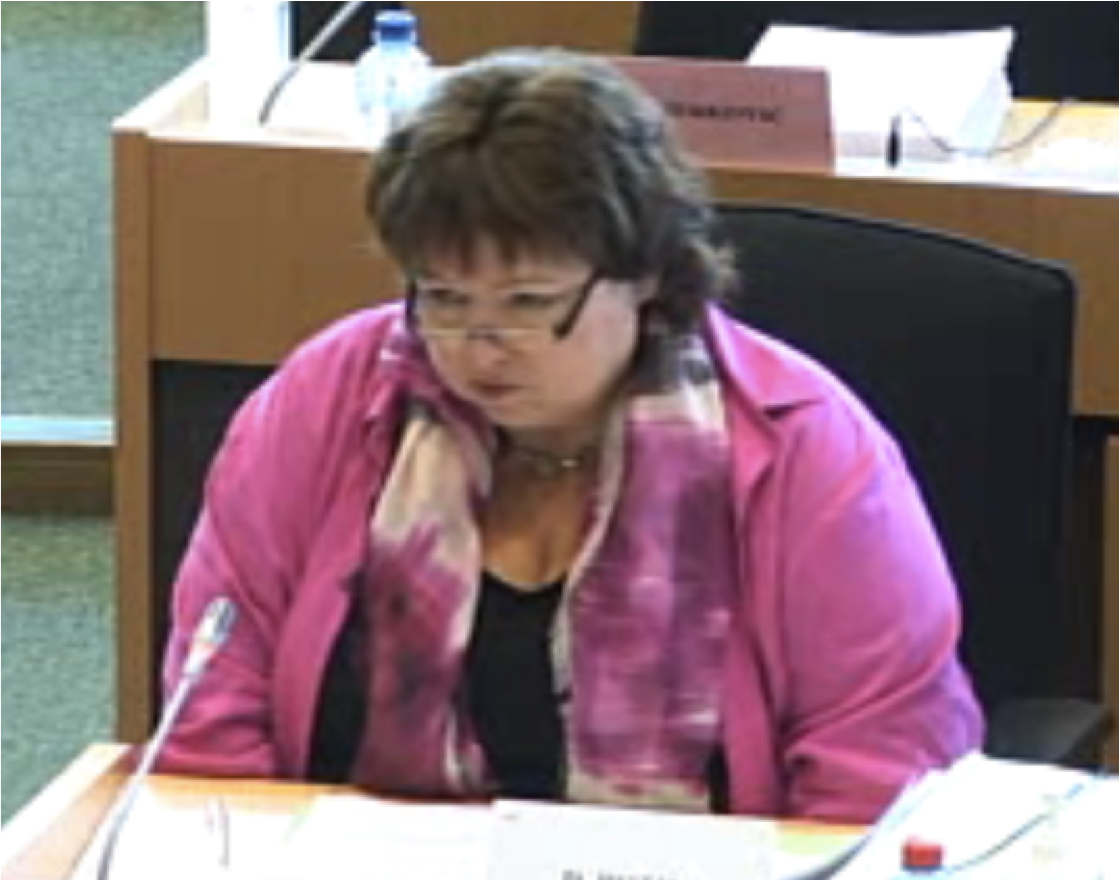
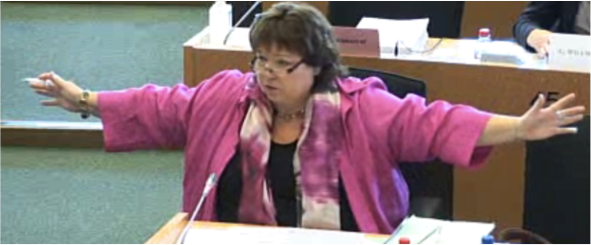
drb2There was some theater at end with Mrs Roth-Behrendt ending the session by accusing the medical devices industry of lying once more. She subsequently proceeded to attacking Mr Kramer directly for doubting her facts basis and proceeding to offering proof to support her statements, suggesting to me that such proof still remained to be collected before it can even be shown. Why sit on such golden evidence if you need to convince people, right? Why the suspense? We haven’t seen suspense like this since Colin Powell finally showed pictures in the UN Security Council that were supposed to prove the presence of weapons of mass destruction (“The photos that I am about to show you are sometimes hard for the average person to interpret, hard for me.”), saying he had facts, corroborated by many sources. And then there turned out not to be any WMDs. I’m just making the point that politics and facts do not always work together very well when large political goals and vested political interests are at stake, and that we should be wary of this getting in the way of solid fact based decisions decisions in the medical devices and IVD dossiers. Because the Commission, for its part, did check facts and underlined that they considered PMA as option in their impact assessment underlying the regulation proposal, and then decided against it because it would not solve the problems of the PIP scandal – while there was no reason to raise the bar on market access controls with PMA. So these facts are there and I would love to see if Mrs Roth-Behrend has better facts than the Commission.

Of course everybody agreed that the highest level of patient safety needed to be ensured, but nobody has been saying it shouldn’t.

Reprocessing

Also there Mrs Roth Behrendt seemed to relent on the plan to turn the world upside down by making every device reprocessable unless proven otherwise (with a high burden of proof). She has difficulties with letting manufacturers ‘print their own money’ by means of single use labeling and it is not really clear in what direction the minds are going. A negative list of devices for reprocessing was coined, but I am not sure that this will get a lot of traction. In any event the Scandinavian countries were very much against reprocessing and were not convinced at all that this could be done safely for plastic products.

Notified bodies

The notified bodies were discussed in terms of the controls member states must exercise over them and the internal expertise that they should have. Some members made the – I think very valid – point that you cannot oblige notified bodies to have all the expertise employed all the time, because that way the best experts may not be available to notified bodies. The general consensus seemed to be that the Commission’s proposal is going in the right direction, but ENVI wants it to be stricter.

Everyone, including the Commission, agreed that member states must control their notified bodies stricter, notified bodies must be monitored more closely and that the competence criteria for notified bodies should go up. I think even the notified bodies themselves are getting used to that though and are bracing for impact for the shakedown that the regulation will bring about. Better start planning time slots a long time in advance at one of the survivors if you are a manufacturer.

IVDs

More on that in a next post, but I should mention that most of the amendments further to the report came from Mrs Roth-Behrendt, as Mr Liese, the rapporteur responsible for the IVD proposal mentioned, which shows that she has made a promise to herself to put a firm stamp on that dossier too.

Conclusion

Is Mrs Roth Behrendt pursuing a clever political plan to seem to overshoot but land exactly where she wanted to in the first place? We will never know for certain, but it seems that the cooler minds are starting to influence where ENVI is going and what compromises may be reached with a view to the vote on 10 July. She also ended the session by saying that she wanted to comprise before the vote, as to not go into a controversial vote. I can only applaud that. She wants the dossier to progress and a large majority vote for the amendments, with a view to having the dossier signed, sealed and delivered early 2014. But, this may prove tougher than she thinks with MEPs saying “Lord knows what’ll happen during vote”.

Schermafbeelding 2013-05-29 om 21.43.18

The Commission expressed that they were happy with the way ENVI was moving this dossier forward and said it would be happy to provide all support necessary, also on technical matters.

I, for my part, think that the member states are the dark horse in this race and they will decide how cooperative they based on how much they like ENVI’s results from the vote. Remember, none of them except France even wants PMA – unless that changed in the mean time since the Danish presidency. That will take a lot of compromising.

ENVI’s IVD regulation amendments

Schermafbeelding 2013-05-27 om 22.47.04As promised, here is an analysis of the IVD amendments further to the report provided by rapporteur Liese, with numbers 75-237 and 238-399. Not that as many as the medical devices ones, but still a lot – and no less complex.

I won’t repeat all the procedural proposals that are both in the medical devices regulation proposal and the IVD regulation proposal (like UDI); please see the medical devices regulation proposal and my discussion of that proposal in that respect. I have tried to group them into categories as much as possible. I’m not at all sure that this blog gives a comprehensive view of all amendments, it’s intended to provide an overview of the points that I considered especially important with the interest of my clients in mind, which are mainly industry (manufacturers, ranging for SME to multinational).

As you will see, an important part of the amendments concerns home brew devices and genetic testing. Home brews obviously feature because this is an important item for industry that has a longstanding and complex love/hate relationship with the subject. Genetic testing, but also self-testing, is being subjected to additional counseling and consent controls that I don’t believe will achieve the policy goals aimed for. It breathes a not too rational fear of the unknown.

As mentioned, ENVI will discuss the amendments among themselves on the 29th of May and vote on them on 10 July.

Accessories

  • Recital 7a and article 2 (1) (3): Accessory rule amended, sensible amendment I think because it seeks to limit the scope of the concept of accessory to only the kind of devices that assist the medical functionality of the medical device. That’s a good way to make sure USB cables, transformers, wifi routers and that type of stuff that are certified for use with a particular medical device do not become accessories.

Definitions

  • More amendments for the definition of medical device: apart from “prediction” it is proposed that it will also include “prognosis”.
  • Article 2 (1) (1) (4) Definition of ‘self test’ to include “testing services offered to lay persons by means of information society services;”.
  • Article 2 (1) (1) (6) Back and forth on definition of companion diagnostic, but in any event expansion of scope (move from eligible for ‘specific’ therapy instead of initially proposed ‘targeted’ therapy, complete redefinition of definition to include label requirements for device and drug.
  • Article 2 (1) (1) (10): label to include also information on the manufacturer’s website (entirely appropriate under the current circumstance and state of art, I would say)Definition of ‘novel device’ and ‘device for genetic testing’ (article 2 (1) (1) (12a) – novel devices definition need for performance evaluation requirements (“– a device which incorporates technology (the analyte, technology or test platform) not previously used in diagnostics, or; – an existing device which is being used for a new intended purpose for the first time;”); “‘ device for genetic testing’ means an in vitro diagnostic medical device the purpose of which is to identify a genetic characteristic of a person which is inherited or acquired during prenatal development.” – this definition is required for the provisions proposed with respect to genetic testing, which I have partly discussed already.
  • Article 2 (1) (5) (32a) addition of definition of (32a) ‘clinical validity’ means a device’s ability to detect or predict a particular clinical condition or physiological state in relation to its intended purpose (e.g. screening, diagnosis, prognosis).
  • Definitions of diagnostic specificity and diagnostic sensitivity (articles 2 (1) (5) (38) and (39).
  • Definition of sponsor: inclusion of “financing” of a clinical performance study as criterion for being sponsor (article 2 (1) (5) (45).

Home brews

  • Recital 9a: “devices which are produced within health institution laboratories for use in that environment and are not subject to commercial transactions are not covered by this Regulation”. You can see the problems with this from miles away – with healthcare being as public as it is, is the provision of healthcare services a situation in which the devices are ‘subject to commercial transactions’? And what if parts or technology are sold to a health institution for building such a device? We’re right back in the RUO discussion that has been going on forever under the current IVD directive.
  • Recital 9a: “In the case of urgent or unmet medical needs for patients, such as emerging pathogens and rare diseases, single health institutions should have the possibility to manufacture, modify and use devices in-house and therefore address, within a non-commercial and flexible framework, specific needs which can not be met by an available CE-marked device.”; this seeks to enable an emergency and/or unmet medical need exemption for IVDs.
  • Recital (9b) “However, devices which are manufactured within non-health-institution laboratories and put into service without being placed onto the market are subject to this Regulation.” and article 2 (1) (3) (21) definition of health institution to change to organizations “within a Member State’s public healthcare system whose primary purpose is the care or treatment of patients or the promotion of public health; commercial laboratories which provide [commercial] [diagnostic / clinical] services are not health institutions” This proposal seems to assume that healthcare institutions will always do better for in-house produced devices or that commercial labs should not engage in unfair competition by building their own home brews. I would have expected a justification for treating these situations differently, because distortion of competition for example happens also with healthcare institution home brews, whereas there is no evidence that they are better at quality and safety than commercial labs (as far as I know anyway). Secondly the definition of health institutions is not future proof in view of the increasing privatization of healthcare in the EU. If you make commercial as opposed to public the deciding criterion, this definition will depend on how each individual member state organizes their healthcare system and what part they put in the public system and what part in the private. Diagnostic services are often outsourced.
  • Article 2 (1) (7) (58a) definition of laboratory developed test to define the scope of the exemption applying to those devices (but only subject to the not so clearly defined ‘public laboratory’-test (see my comments above): “a device that is manufactured and used only within a single site. This includes devices which a laboratory develops de novo, or develops or modifies from a published source, or develops or modifies from any other source, and devices for which a laboratory:
  • – changes the intended purpose of a device already placed on the market or put into service;
  • – modifies a device already placed on the market or put into service in such a way that compliance with the applicable requirements may be affected.”
  • Article 4 (5) (1) Member states must require submission of a list of laboratory developed devices and must impose further safety requirements. The initial proposal already did not specify what those further safety requirements could be.
  • Article 4 (5) (2) – back and forth between amendments regarding the classes of lab developed devices subject to exemption and the scope of the exemption regarding class D devices.
  • Article 4 (5a) – possibility for member states to restrict in-house manufacture altogether and make it subject to additional requirements.

Documentation and label

  • Recital (32) summary of safety and performance – back and forth between amendments on what classes are considered high risk (C and D, says one), where the report should go (authorities and/or Eudamed) and whom should have access to it in Eudamed.

Market access controls

  • Recitals (35), (35a)  and (38) – creation of a ‘swift’ market authorization procedure for “high-risk in vitro diagnostic medical devices of class D”. I have been saying it and will say it again: using the word swift does not make something fast except in fairytales where magic spells actually work. The marketing authorization procedure copies the terms of those of medicinal products and not even the authorities themselves call those ‘swift’, as I have argued again and again and demonstrated by reference to the EMA’s Roadmap to 2015. Also medical devices authorities are now openly saying (based on actual research, mind you) that while some degree of additional control over what notified bodies do (which the Commission put in its initial proposal), the real safety and risk reduction benefits are to be reaped in the (and don’t say I haven’t been telling you this for some time) post-market phase by (drumroll please) obliging doctors to report incidents and active monitoring after market access. Active monitoring after market access is precisely what even the pharma regulators propose with the adaptive licensing model and what the Commission proposed to implement with the post market clinical follow up plans. The PMA controls that are being proposed are so contrary to what is considered state of art regulation that I am deeply disappointed in this process of fact free politics that ENVI is running. As Victor Hugo said: “On résiste à l’invasion des armées; on ne résiste pas à l’invasion des idées.” (often wrongly paraphrased as: “One cannot resist an idea whose time has come.”), but let’s not allow fact free politics to rule this discussion and rather go with the evidence based approach of regulators that also ENVI thinks know what they’re doing and colour between the lines of the regulatory state of art rather than take the populist DeLorean back to the future and all be worse off. A good friend of mine said in relation to the General Data Protection Regulation proposal that “ignorance x fear = inertia”, which is completely spot on in this legislative project too. Yes, the system needs to improve and no, 1965 medicinal product directive methods are not the way to go – everybody agrees with that except some parliamentarians, which are the only ones in this discussion not using facts to back up their position. Sounds bananas, right? It is.
  • article 39 (1) – “novelty, complexity” are also classification criteria for division in risk classes. This shows how fundamentally flawed and populist the ENVI committee’s thinking is in these matters: they seem to reason “innovative = scary = risky” as well as “complex = too complicated for me to understand = risky”, which is scientifically utterly unfounded and will damage EU credibility and innovation. That is the kind of thinking that used to get scientists in trouble with the church centuries ago. But really, we should be beyond this in the 21th century.
  • Article 39a-f sets out a procedure for a central marketing authorisation for innovative class D devices and a decentralized marketing authorization for non-innovative class D devices administered by EMA (article 39c). I think I have said enough about how unworkable a criterion of “innovative” would be, especially if left to the Commission to define by means of delegated act. This a very bad and unworkable idea that will impact innovation very badly. It also makes things unnecessarily complex with the definition of ‘novel device’ proposed in article 2 (1) (12a) that has no bearing on the deciding criterion for the marketing authorization procedure.

Clinical, PMS and vigilance

  • Recital (44a) and article 48a “An interventional clinical performance studies or any other clinical performance study should only start after being granted a positive evaluation by an independent ethics committee.” – the IVD regulation proposal already contained an instrument for the evaluation of clinical performance studies, but the Parliament is differing in opinion with the Commission  whether or not Ethics Committees should do that evaluation. The Parliament says yes, also in the Clinical Trials Directive revision.
  • Recital (49): Reporting of suspected serious incidents anonymously, and raising awareness of the importance of reporting suspected serious incidents. The justification provided is that “The Vigilance procedures in Chapter VII will only function correctly if healthcare professionals feel able to report incidents without fear of retribution. In some circumstances, anonymous whistle-blower protection may be needed in order to ensure full and frank incident reporting.” – I don’t understand this. HCPs should be obliged, morally and legally, to report suspected incidents for vigilance to function correctly and not encouraged. If their work environment is such that they would need whistleblower protection, the authorities should root out the problems and fix them. It’s like with anti-corruption: rules only work if they apply to both sides of the equation, so both to HCPs and manufacturers.
  • Report of suspected serious incidents must take into “whether parts or components have been replaced”, which is interesting in light of the rules for components that change performance and risk of the device.

Advertising and marketing

  • Article 1 (6) direct to consumer advertising limitations of of prescription only devices (class D and C (C for companion diagnostics and genetic testing devices)), with possibility for Commission to include more by delegated act. New article 5 (2b) proposes contains general ban on a number of misleading or deceptive B2C and B2B statements that are already covered by general misleading advertising or unfair B2C marketing rules and just complicate matters.

Genetic testing

  • Article 4a – new requirements for genetic testing: use of devices for genetic testing only with informed consent, administered by admitted persons , weird additional requirement that “the clinical data generated in the course of the testing are expected to be reliable and robust” (that is something you would check during conformity assessment of the device, right?), mandatory counseling which “shall include medical, ethical, social, psychological and legal aspects” and its form and extent depend on “significance for the person or the members of that person’s family” (so will I be able to sue my doctor if he does not correctly inform me about skyrocketing life insurance premium consequences of a test result? With this wording I would certainly try.). The amendments made are intended to make “clear that genetic counselling is not mandatory when it just confirms a specific diagnosis and it is also not necessary for companion diagnostics or when the genetic test shows a normal finding. I find the predisposition of the ENVI committee to meddle with genetic testing worrying given the enormous potential of health advances with personalised medicine as described by Eric Topol. It may sound disruptive what he says but it truly makes sense, just like washing your hands as a doctor (which was also a very disruptive theory at the time). If you want to protect people, transparency is the best option and rather than keeping them ignorant they should be better protected against social security and insurance consequences that they cannot understand in advance.

Transparency

  • Article 8 (2) and Annex 2 – point 7 (new) – proposal to make the whole technical documentation (tech file) public – fits in the current move towards transparency but overshoots it completely (all other proposals were limited to the clinical parts of market access dossiers) because the whole tech file will be crammed with confidential information that manufacturers will never want to disclose. This would truly be a violation of article 39 TRIPS if you do not already consider disclosure of the clinical part that.
  • Article 8 (9): a right of information for product liability cases to balance the information disparity with the manufacturer.
  • Annex 6 – point 1 – point 1.1 – point 1.1.4 – paragraph 1  Public availability of “The organisational structure and the functions, responsibilities and authority of its top-level management and of other personnel with influence upon the performance and results of the conformity assessment activities shall be clearly documented.”

Companion diagnostics

  • Article 7 (1) – proposal to limit CTS to only class D and companion diagnostics.
  • Design requirements for clinical utility for companion diagnostics (Annex 1 – part II – point 6 – point 6.1 – point b)
  • Annex 7 – part 2 – point 2.3 – paragraph 1 – point f – point i Upclassing of certain companion diagnostics from default class C to class D “when intended to identify patients at risk of life-threatening adverse event, or where the selection decision may lead to the withholding of a potentially life-saving treatment”
  • Annex 8 – section 2 – point 6 – point 6.2 – point c a (new) and Annex 9 – point 3 – paragraph 1 – point 3.5: CTS for companion diagnostics

Self-testing devices

  • In the vein of the genetic counseling proposals “Member States should ensure appropriate counselling conducted by persons admitted to the medical profession under the applicable national legislation before the use of such self-testing devices that are manufactured to test for chronic and transmittable diseases.” (Annex 1 – part II – point 16 a (new)).

Classification

  • Annex 7 – part 2 – point 2.6 – paragraph 1: “novel class B devices will be classified as class C.” – refer to proposed definition of novel device in 1 (2) (12a).

To conclude

ENVI discusses these amendments and the medical devices ones tomorrow and votes on them on 10 July. Do you see anything that doesn’t make sense or is just plain bananas like the PMA system proposed? You can still influence the discussion. Contact a parliamentarian from the ENVI committee and tell them what you think, preferably contact the ones that have put their name to amendments (which you can see in the amendments that I linked to). Together we have a lot to lose as a result of ineffective legislation. I would truly hope that there are more people with an opinion in these matters.

And Mrs Roth-Behrendt and others in ENVI – in case you think I am in the pocket of the industry please think again: several members of my family depend on medical technology for their LIFE. This dossier is not a game for them. I want the best technology available to them as quickly as possible, not the least innovative and that too much delayed. I want it for myself too when the time comes, because we’ll be working with this legislation for decades to come. That is more important to me than anything else in the world. With these proposals you will not deliver on your promises, regardless of what you say in hearings. It’s time to ditch the fact free politics.

ENVI’s amendments

ENVIENVI’s amendments, following those of IMCO  have been published now after translation, see here for IVDs and here for medical devices. This accounts for the biggest load of the amendments (297 – 907 on medical devices and 75 – 399 on IVDs), but here is a list of the things that I found particularly interesting. I am sure other people would  put other accents in this huge pile of amendments, so I would encourage you to read them for yourself for a full  and unbiased picture.

Mind you, these amendments are additional to the reports that the rapporteurs Roth-Behrend and Liese produced earlier so they will not repeat those proposals in there. Also, the amendments are not always consistent with each other: there may be multiple amendments for the same clause by different people. Overlay these with the IMCO ones (88- 212 on medical devices) and the first outlines of political compromise will start to show; the rest will remain subject of debate.

This post does not include the IVD amendments yet, I’ll discuss these in a later post.

Medical devices amendments

So, here we go for the list of items in the amendments that I think should be flagged:

  • No more updating of Annex II (essential requirements) and contents of Annex III (format of declaration of conformity) by means of delegated act
  • Analysis and reporting of PMS by “independent organizations” (no guidance on what those might be)
  • PMSP (post market surveillance plan) to be validated by authorities responsible for granting or re-evaluating market authorizations, and be carried out by an independent authority which has in no way contributed to the device’s market authorisation or the re-evaluation thereof (that will be interesting, authorities carrying out post market surveillance plans of manufacturers – seems highly unpractical)
  • Increased information obligations by manufacturers to parties other than authorities (consumer associations, for example)
  • Responsibility for the placing on the market of products on the part of the authorized representative (this solves an old problem  of unclear drafting in the different language versions of the current directive, but will change the game of ARs substantially)
  • Mandatory product liability insurance for manufacturers, plus an obligation to bear costs to the health system to treat patients harmed as a result of malfunctioning or defect devices, as a condition for importation into the EU of devices (I’m not sure if this will fix the problems that it intends to fix, because insurance companies are not in the business of paying out claims and this may backfire on the patients if there is not more detail on the timelines for settling claims etc.)
  • A surprising softening of supply chain responsibilities for distributors (e.g. no obligation to do recalls, which I find unbelievable and contrary to the MAID system as set up horizontally)
  • Some tweaking of the QP’s qualification requirements
  • Reuse of a device outside of the specifications set out in the manufacturer’s instructions for use makes a person or company manufacturer (this makes a lot of sense, because such reuse takes a device outside the scope of its CE mark)
  • Various amendments pushing and shoving on reprocessing (whether or not the reprocessor is manfacturer or just needs a quality system), placeholders for delegated/implementing acts on requirements and mechanisms for determining maximum number of reprocessing cycles and devices that cannot be reprocessed at all, information obligations to patients about whether a device has been reprocessed (as I have blogged, the reprocessing regime proposed is nuts and will backfire on the market and the patients – it will upset liability and risk for manufacturers and basically oblige manufacturers to do the reprocessor’s clinical validation. The reprocessor, in turn, will have no incentive to innovate in materials or devices that can be reprocessed better – everyone loses.)
  • Electronic version of the implant card
  • Compatibility requirements for modular implants with a view to replacement of parts
  • Reversal of burden of proof of product liability (“The manufacturer will be held as legally responsible for the damage caused by a class IIb or class III medical device to the patient, unless he can prove the damage was caused by improper application by the healthcare professional or the patient, where relevant.”) (this is an exception to the burden of proof in directive 85/374, which provides for a burden of proof on the patient. If this is adopted, medical devices will be the only sector with a diverging burden of proof (not even medicinal products have that), which does not make sense. Better amend the Product Liability Directive, but that will be politically too complex. Therefore, legally speaking this amendment is pure window dressing and does not stand a chance.)
  • Compatibilty of traceability systems (good idea, but how about some standards?)
  • Language harmonization in registration (IMCO’s idea too (stolen from the Dutch), the more the better)
  • Single registration procedure (already applies for IVDs)
  • Various additional requirements for reporting on safety and clinical performance
  • Various amendments on the level of access to Eudamed of clinical professionals and the public
  • Primate of responsibilities for notified bodies explicitly with the accrediting member state (goes against what IMCO proposed with a supranational system, except for an amendment that reserves this for NoBos claiming devices listed in class III, those implanted into the body, incorporating a substance considered to be a medicinal product, or utilising non- viable tissues or cells of human or animal origin, or their derivatives)
  • Various amendments on formalities surrounding conformity assessment (duration etc)
  • Member states may impose minimum frequency of unannounced inspections; taking away of competence of the European Commission in that respect by delegated act (Bad idea, member states have already demonstrated enough that they can’t be trusted with market surveillance)
  • Deletion of Commission competence to supplement conformity assessment procedures by delegated act (hate it or love it, but we will go back to complete overhauls of the whole statute for small changes, and the past has demonstrated that this is not the best solution)
  • “At all of the stages in the conformity assessment procedure, the notified assessment body shall carry out at least one unannounced inspection at the manufacturer’s production facilities before making a decision on conformity.” (this is nuts, doing unannounced inspections on production facilities before (SIC) production has started or the facilities would be required to even be present)
  • Proposals for PMA alternatively scrutiny for various types of devices (this is the big wild card)
  • Proposal for scrutiny of notified bodies and peer review of competent authorities responsible for notified bodies
  • Unannounced inspections at least once a year during the duration of the certificate of a device (but other proposal to credit the cost, nature and extent against regular inspections)
  • More detail on clinical investigation and a push to re-involve Ethics Committees (in alignment with the revision of the Clinical Trials Directive, so no surprise)
  • Many amendments on the varying levels of access to clinical trials section of Eudamed  for healthcare professionals and the general public (interesting in the light of the pending Intermune case at the European Court)
  • Proposal for medical devices PSURs
  • Hierarchy provision for blood and blood components rules (higher than medical devices rules)
  • Competence for (cross-border) (joint) inspections by member states at operator premises
  • Obligation for member states to draw up strategic monitoring plans for surveillance, on which the Commission may give recommendations (interesting idea)
  • Setting up of a Medical Devices Advisory Group to advise the Commission  and the MDCG on the technical, scientific, social and economic aspects of the placing on the market and availability of medical technology and related services in the Union, comprised of representatives from associations of patients, clinicians, nurses, carers and healthcare facility managers, relevant medical device manufactures and other relevant fora.
  • Several amendments around the competences of the MDCG and especially what it can do in terms of policy setting and development of guidelines
  • Amendments on the design requirements in relation to dangerous substances and nano materials (very prescriptive, better to leave that to be filled in on state of the art basis with CTS for example)
  • Labeling amendments to make the distinction between medicinal products and medical devices ‘clearer’ (window dressing coming from old age thinking that medical devices are nuts and bolts products)
  • Amendments on the requirements for notified bodies annex to raise the bar and implement parts of the Notified Bodies Code into the regulation, including on unannounced inspections (which may explain why the Commission is waiting with its Recommendation on unannounced inspections that was supposed to become public and enter into force this month)
  • Amendments to conformity assessment routes for various scary and risky devices
  • Clinical criteria for implantable and class III devices: novel devices must do more than demonstrate equivalence, iterations may do so
  • Clinical investigation requirements for incapacited persons and minors

First impression

Some good, some bad, some crazy – that sums it up about the amendments in my opinion. A lot of the amendments concern wordsmithing (changing political drafting qualifiers like “appropriate cases” to “without exception” etc). As the IMCO amendments, the video report of the 6 May ENVI meeting and these amendments show, the animo for PMA is actually not that high and the rapporteur seems to have limited political support for this option. The Commission does not see any benefit in it (just watch the video report and see Mrs Spanou, the Director for Consumer Policy at the Commission, grit her teeth trying to stay polite) and the Member States are in no mood to take on this task or give part of it to the EMA. I am happy to see this, because as I have argued repeatedly and as even the EMA has already stated: more pre-market control does not make for better protection of the public if the products are already safe enough. Post-market controls do and that is the way to go forward. I am happy to see that this message is not wasted on many of the other parliamentarians as many of the amendments have picked up this point. I hope the same happens with the reversal of regulatory logic on reprocessing that will also lead us nowhere, will make treatments with devices potentially a lot less safe and will not solve the cost issues (remember, Roth-Behrendt says ‘single use labeling is printing your own money’ – like facilitating a whole industry based on reprocessing of devices that are not intended to be reprocessed is not printing money, while on top of that risking patient safety and jeopardizing outcomes in the bargain). What I am still sorely missing is an obligation on HCPs to report incidents – they are the first to notice that something is wrong with a device so they should be under an obligation to report incidents (and not sweep it under the rug as a complication if they are afraid that further investigation shows that it was a user error and not a device failure).

And then

The ENVI committee, the lead committee in this dossier, will deliberate about its own amendments and those of the IMCO committee. It will subsequently vote what amendments will be put to the vote in Parliament’s plenary meeting (see my last post on IMCO’s amendments). And then the Council will need to put the cards on the table that it so far has been keeping tightly against its chest.

The fog of war following a tsunami of amendments

drb2

‘A speedy market access procedure of only this long.’

That’s a good term to describe a situation of limited situaltional awareness resulting from many things happening at the same time very quickly, and a good term to decribe the situation we are currently in with the medical devices and IVD regulation proposals and the amendments proposed.

Tsunami of amendments

The period for tabling amendments in the ENVI committee following Mrs Roth-Behrendt’s (general medical devices) and Mr Liese’s reports (IVDs) has passed, and there are a lot (more than 1000). I hear that it is expected that they will be published by the end of this week. I expect to have to sink a considerable investment in time to make sense of this tsunami of amendments. A first set published by the IMCO committee is here. IMCO’s proposed amendments include:

  • no PMA
  • no scrutiny procedure for devices but rather MDCG governed scrutiny of notified bodies and national competent authorities responsible for notified bodies (which I agree with being the better approach because the flaws in the EU system are in its supervision)
  • EMA consultation for ancillary blood derivatives
  • definitions of ‘safety’ and ‘performance’
  • definition of sponsor includes ‘funding’ as alternative criterion (so funding a trail without managing is sufficient to be sponsor)
  • exclusion of possibility to justify not engaging in PMCF for class III devices
  • strict and high standards for reprocessing
  • compatibility requirements for implantable modular devices
  • refurbishment criteria and a requirement to assume manufacturer incumbent obligations
  • attention to compatibility of UDI systems
  • language harmonization for Eudamed
  • For devices classified as class III and implantable devices, the summary of safety and clinical performance shall be updated at least annually with clinical evaluation reports
  • data on adverse events and safety data shall not be considered commercially sensitive information
  • criteria for use of equivalence for iterations of implants and class III devices

But this is IMCO talking (with amendments 88-212 out of what I understand about 1000), so we’ll have to see what the rest proposes before we can really get a feel of where things are going.

IMCO’s IVD amendments are here, which overlap with the above ones on medical devices as far as applicable to IVDs and further include:

  • tweaking of definition of companion diagnostic to “device specifically intended to and essential in selecting patients with a previously diagnosed condition or predisposition as suitable or not suitable eligible for a targeted therapy with a medicinal product or a range of medicinal products
  • tweaking of scope for home brew devices classified as class D and required to be used for transfusion or transplantation purposes
  • summary of safety and performance requirements for class C and D devices (shall be accompanied by the dataset collected during the clinical investigation and the post-market clinical follow-up)
  • Realization of the clinical performance studies shall be subject to a positive opinion by the responsible Ethics Committee.

What happens now?

A good way to get a feel of how the important actors are thinking can be gotten from this video report of the recent discussion of the proposals. You will have the opportunity to see what Mrs Roth Behrendt and Mr Liese are saying about the proposals when you give them the floor. You’ll also have the possibity to make up your mind about the explanation of the underlying argumentation, which I found glaringly lacking sometimes. Just some examples by Mrs Roth Behrent:

  • ‘PMA will not cause delays in market access – well, may a little, just some months – but that ‘s the same’ – the same as what? I have not seen any data to compare against in the justifications to the proposals in the report , so what is the comparision with? We don’t even know what to compare with because we don’t know what ‘innovative’ devices might be regulated under proposed procedure – that was left to the Commission to sort out, remember? I think it is inappropriate to accuse others of bad lobbying and even outright lies if they question this shaky factual basis.
  • ‘Single use labeling is like printing your own money’. Yes, she actually said that on the record. So this is what motivates the reversal of regulatory logic proposed that all devices (yes, your hips, cranial plates, pacemakers and stents) are reprocessable unless you can prove it’s not possible to do that safely.  This statement about printing your own money is so biased that I cannot believe it – my compliments on the lobbying on this subject. If this enters into force I am bringing my own sterile devices to the hospital like you do in developing countries, because in my law practice I see the cases of the people that are harmed by medical technology that fails because it is not (re)used as intended by its manufacturer. I see how clinical insitutions struggle with quality systems. If you compare quality systems in aerospace and healthcare, the difference in procedure success rates is 20% (99,9 vs 80 in healthcare), I heard on a podcast about healthcare statistics. The medical profession gets away with that by calling it complications and these harm only one person at a time that spends years fighting in court against a hospital that will just stonewall the patient. If you still need to train doctors to wash their hands, how will this go with reprocessing? Hospital infection anyone? Really, this is leading us nowhere.

You will also note the critical reactions from the other parliamentarians and the Commission, who are not at all convinced that this is the solution to the problems.

But Mrs Roth Behrendt will not be around to be accountable for her proposals as she is now in the race to become European Ombudsman, a  political career move after having spent a long time in the European Parliament. Perhaps she can help these harmed patients then, and make sure that public hospitals at least compensate them quickly if they have contracted something dangerous from badly reprocessed invasive single use products.

Where do we go?

Anyway, see for yourself how the political wind is blowing in the three hour video. I still think the Commission’s inital proposal makes a lot of sense expect for the sacrifical lamb of the scrutiny procedure, which could be fixed (and there are amendments for that, I’ve seen). Incidentally, the Commission remarked that the Dalli Action Plan has been implemented for 70% by now, with joint audits happening and all.

While the proposals are moving up in the Parliament the member states will also be taking a closer look with a view to the first reading in the Council (see below).

Next steps are now:

  1. The publication of the amendments (soon, I expect end of this week)
  2. Discussion of amendments in ENVI (29 May)
  3. Vote on amendments in ENVI (10 July)
  4. Plenary vote in Parliament (scheduled for 11 November 2013)
  5. Council first reading (who may not get to this before spring next year) to agree on a joint text, as is required under the Ordinary Legislative Procedure.
  6. Will we make the elections and Commission change in early summer 2014? If we don’t, there will be some delay because the new Commission and the new parliament have to make up their mind about this.

This delay might actually not be bad in the end because it gives some people time to go do other things and other people time to apply logic and evidence based argumentation to rules that will shape the delivery of healthcare for decades to come. To give it my own Yogi Berra spin: ‘if rules don’t change they tend to stay the same’. Which is not bad if you realise that the current rules already allow for a 100% Dalli Action Plan rollout. If we can accompish that, we are already where we should be.

Watch this space

More news on the amendments will be forthcoming, just give me some time to collect the information and boil it down to managable proportions.

Something completely different: a EU medical devices regulation chart

Schermafbeelding 2013-04-26 om 10.42.26

And now for something completely different from all the discussion about future rules and where they may take us: the RAPS Dutch/Flanders chapter has been active in defining a list of EU legislation that does not directly regulate medical devices but catches them in its scope, like environmental design requirements for electronic devices.

This resulted in an initial helpful overview in Dutch, which my firm offered to expand to an English language document that includes not only active links to the underlying legislative texts, but also to the EU law summaries in the ScadPlus database (if available) and to the EU Commission web pages with explanation about the rules concerned.

So that’s what we did – and you can download it here, for free, no strings attached, no need to give us your email address, mobile number and birthday and all that  (we hate it if we get asked to provide that too so we won’t bug you for that).

We would really appreciate though if you would tell us if you don’t agree with this chart, or if you have helpful additions because you think it’s incomplete. Also, mind you – this list is in constant flux because these rules tend to be amended a lot. If you’re not sure at any point, we – and in particular our new devices lawyer Sofie van der Meulen (who prepared the overview and presented it on 26 April at the RAPS chapter meeting) – can help you figure it out. Also, if you’re active in medical devices in the Netherlands and Belgium, becoming member of the RAPS Dutch speaking chapter is a good idea because they do many useful things, and this initiative is only one of them. They don’t have a website yet, but you can keep track of them by joining their LinkedIn group.