Advertising and promotion of reimbursement for medical devices

On Tuesday 22 February I delivered this presentation at the Q1 2nd Annual European Medical Devices Reimbursement Conference.

My presentation addressed the question of what constraints there are on companies providing information with respect to coverage and reimbursement to customers. There are many, both contained in mandatory law and self-regulatory rules.

It was remarkable to hear how similar and at the same time different national reimbursement systems are in the EU, as for medical devices no harmonisation has taken place yet in the field of reimbursement. For pharmaceuticals there is some in the form of the Transparency Directive. However, the upcoming Cross-Border Healthcare Directive is expected to lead to de facto harmonisation in the field of medical devices as it provides for a legal basis for HTA cooperation, as you will also see explained in brief in my presentation.

EU moves forward on singlish EU patent

It’s not breaking news anymore, but important anyway as this dossier is moving: the EU Parliament approved going forward with the singlish EU patent (singlish because not all EU member states are participating, Spain and Italy have decided to opt out for the moment but may opt in later).

The next step will be taken in the Council. The Council of Competitiveness Ministers is expected to formally adopt the decision authorising enhanced cooperation on 9-10 March.  The Commission will then submit two legislative proposals: one establishing the single patent (under the co-decision procedure) and the other on the language regime (consultation procedure). The Parliament has adopted a resolution calling upon the Council to use the co-decision procedure for both proposals.

How uncontaminated should sterile be? A case about an IVD

Medicaldeviceslegal is proud to report its first sent in medical devices judgment, kindly sent in by James Lawford Davies from the UK life sciences law firm Lawford Davies Denoon. Many thanks James, and may many readers of this blog follow this example.

The case, The Queen on the application of JBOL Ltd and the Health protection Agency concerns a controversy between a UK company JBOL Ltd and the UK Health Protection Agency about the concept of ‘sterile’ under the EU In Vitro Diagnostic Devices Directive (“IVDD”).

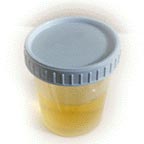
JBOL produces urine containers that are sterile in the sense that the chance of a viable micro-organism being present in them is 1 in 1,000,000 or less. Urine containers are ‘specimen receptacles’ regulated as IVDs under the IVDD. The Health Protection Agency’s initial guidance note BSOP41 on “Invesigation of urine” required that “The whole specimen is collected into a sterile container and then an aliquot sent for examination”. The Agency changed the guidance in October 2009, replacing the word “sterile” with “a CE marked leak-proof container” with a footnote containing a reference to the IVDD:

“The requirements of the EU in vitro Diagnostic Medical Devices Directive (98/79/EC Annex 1B 2.1) state that such devices must “reduce as far as possible contamination of, and leakage from, the device during use and, in the case of specimen receptacles, the risk of contamination of the specimen. The manufacturing processes must be appropriate for these purposes.”

JBOL started legal proceedings against the Agency because it resisted the removal of the term “sterile” from the guidance. The Agency defended itself by arguing that the urine containers had always been subject to the mandatory standards imposed by the IVDD and that these never required sterility. The court finds that the Agency did not act unlawfully when it decided to remove from its guidance the requirement that urine should be collected and transported in sterile containers (point 31 of the judgment), that the IVDD does not require urine containers to be sterile (point 35 of the judgement) and that the Agency did not have to amend its guidance to clarify the reference to the IVDD as the Agency had not acted contrary to the IVDD by referring to it (point 36 and following of the judgment).

This case highlights the obvious problems that may arise when national regulators start clarifying EU medical devices requirements that are already quite detailed and were subject to a harmonised standard (EN 14254), especially when companies have been relying on the national guidance issued, even if this imposes stricter requirements than EU law prescribes. In that case a national agency is in a difficult position because EU law prescribes that it cannot deviate from EU law, while the companies will argue that they have relied on the agency’s guidance in good faith. In this case the UK courts take the side of the agency, allowing it to bring its guidance in conformity with EU law, even if this changes things on a national level for companies relying on the national guidance.

ISO 14155:2011 is here: revised standards for medical devices clinical trials

ISO 14155, who in medical devices  is not familiar with that standard with respect to clinical investigation of medical devices for human subjects? Not that long after the EU had harmonised the 2009 version that introduced a more project management oriented approach (the 2003 harmonised version ceased to apply in the EU as of 21 March 2010) the IEC published the long-awaited new version of the ISO 14155 with its new requirements and which consolidates the two parts.

According to the ISO summary the scope of 14155:2011 is

good clinical practice for the design, conduct, recording and reporting of clinical investigations carried out in human subjects to assess the safety or performance of medical devices for regulatory purposes.

The principles set forth in ISO 14155:2011 also apply to all other clinical investigations and should be followed as far as possible, depending on the nature of the clinical investigation and the requirements of national regulations.

ISO 14155:2011 specifies general requirements intended to protect the rights, safety and well-being of human subjects, ensure the scientific conduct of the clinical investigation and the credibility of the results, define the responsibilities of the sponsor and principal investigator, and assist sponsors, investigators, ethics committees, regulatory authorities and other bodies involved in the conformity assessment of medical devices.

Remember, ISO 14155:2011 does not apply to in vitro diagnostic medical devices.

Companies should start to prepare for the implementation of IsO 14155:2011 because there are quite a few changes compared to the old standards. It’s important to realize that there is no transitional period after the EU harmonises the standard and your company’s clinical investigations will need to meet the new standard. Companies should rather use the period of publication by ISO and harmonisation by the EU (which may be several months) as sunshine period for becoming compliant. This is particularly important for

  • studies that will be finalised in this Sunshine period; and
  • studies that are in the process of being set up and start after the publication of the harmonised EN 14155:2011.

Companies should make sure that they have informed themselves how the entry into force by way of the new standard being harmonised by the EU will impact their ongoing and planned studies. Companies that get it wrong may face a difficult discussion with their notified body that will not be able to accept the clinical investigation, which will delay issuance of the CE certificate and may cause companies to have to redo administrative work, or, in the worst case, a trial that was not set up according to the new rules.

EU IP developments relevant to medical devices

There are at least two IP developments going on in the EU presently that are of great importance to the medical devices industry. First, there are the developments toward a single EU patent, a lengthy process to say the very least, which seems to be arriving at an important step. Secondly, there is the consultation about the revision of the EU IP enforcement directive, the EU instrument that prescribes to the EU member states how they should organise IP enforcement tools for IP rights holders.

The important step that the EU unitary patent has arrived at is that the EU Legal Affairs Committee approved use of the enhanced co-operation procedure to create a unitary patent system in the EU, as requested by 12 Member States last year, on 27 January. If Parliament as a whole and Council authorise this use of enhanced cooperation (the European Parliament as a whole will vote on the proposal during the February Strasbourg session and the Competitiveness Council will examine it on 10 March), the Commission will have to table two legislative proposals – one on the language regime and the other establishing the single patent. This will allow the EU member states in favour of a single EU patent to move forward with it, while those that still object to the proposal (language problems have proven the most difficult to resolve as member states are reluctant to allow patent to be in other languages than their own). With patent being especially important to companies in high tech fields such as medical devices companies, it hurts EU competitiveness if patents are much more expensive to obtain in the EU than elsewhere, one could say prohibitively expensive. It has been calculated that with the whole European (EPC) geographical area covered a patent would cost at least 15 times more than in the US for coverage of the whole EU. A European patent validated in 13 countries can cost up to €18,000, of which nearly €10,000 goes to pay translation fees alone, making a European patent 10 times more expensive than a comparable US patent. Hopefully the Commission’s proposals will bring the costs of EU patents down to acceptable levels, but it will still take time before these proposals would finally be implemented.

The second important development concerns the Commission’s plans to revise the EU directive on the enforcement of IP rights in member states. The European Commission has launched a public consultation on 11 January 2011 on the findings of a report assessing the application of Directive 2004/48/EC on the enforcement of intellectual property rights in the Member States. The report shows that certain provisions of the Directive have given rise to different interpretations and application in practice across the Member States. Furthermore, it addresses the extra, challenging dimension to enforcing intellectual property rights that the Internet and digital technologies present. Also, the report concludes that

“Other issues that could need special attention are the use of provisional and precautionary measures such as injunctions, procedures to gather and preserve evidence (including the relationship between the right of information and protection of privacy), clarification of the meaning of various corrective measures, including the costs of destruction, and calculation of damages.”

This latter point will be of particular significance to the medical devices industry, as counterfeit medical devices pose an increasing problem in the EU. Although the Commission had an impact assessment carried out on among other things it has not yet followed up on one of the recommended actions of the assessment:  a directive dealing with counterfeit like the one in the works for medicinal products. Improved instruments for removing counterfeit devices from the market proposed by the Commission, also when not in possession anymore of the party sued for infringement, would benefit the medical devices industry greatly. Otherwise even after a judgment finding infringement, the authorities might still need to issue warnings like this one and patients could not be sure that the devices used on them are actually safe.

This consultation ends on 31 March 2011. Any companies interested in responding: if you would like assistance, I will be happy to help.

New standard for medical technology used at home

Earlier this month the EU published a new notice of standards harmonised under the three medical devices directives. Although this in itself is news, I would like to put the spotlight on one interesting standard that will give manufacturers of medical devices that are early adopters in eHealth and medical technology in the home a strategic advantage: the EN 60601-1-11:2010 Medical electrical equipment — Part 1-11: General requirements for basic safety and essential performance — Collateral standard: Requirements for medical electrical equipment and medical electrical systems used in the home healthcare environment. In the words of the IEC:

“IEC 60601-1-11:2010 applies to the basic safety and essential performance of medical electrical equipment and medical electrical systems which are intended by their manufacturer for use in the home healthcare environment, regardless of whether the medical electrical equipment or medical electrical system is intended for use by a lay operator or by trained healthcare personnel. The object of IEC 60601-1-11:2010 is to specify general requirements that are in addition to those of the general standard IEC 60601-1:2005 and to serve as the basis for particular standards.”

This standard takes all kinds of home situation related risks and dependencies into account, such as inexpert users, less-than-optimal clinical environment, less-than-clinical standard electricity supply and so on. A nice overview is provided in this white paper on home healthcare equipment by Underwriters Laboratories. By referring to compliance with this standard, authorities in the EU have to assume compliance of manufacturers of medical devices with the essential safety requirements for medical devices, so this standard will clarify what is required for home use devices.

As eHealth develops, more and more medical technology will be moved into the home for detecting and measuring purposes. eHealth providers seem very much focused on the standards for devices and applications involved in eHealth to talk to each other, but the devices that are the senses of the eHealth applications will be functioning in home situations. These devices will often qualify as medical devices in their own right, or, if they function together with certain applications or services that constitute medical devices, as accessories to those medical devices (and therefore need regulatory clearance as medical devices in their own right). In those cases EN 60601-1-11:2010 will be an important standard.

The standard is of course not only important for eHealth applications, but also for devices already functioning in the home.

Software design for medical devices

I just returned from an interesting conference in Munich about software design for medical devices. I had the privilege to present on legal issues and some regulatory issues related to software and EU medical devices law. The crowd was an interesting mix of experts that all carried different parts of the puzzle: some in-house lawyers, many software developers, some people concerned with QA/RA activities. Unfortunately I could not stay for another day to have more discussions with the people present.

A lot can obviously be said about the subject but I think in particular my concluding observations on the influence of the current eHealth activities and the upcoming EU medical devices recast on requirements and on companies’ processes will be interesting for readers of this blog to take a look at. Presently, for example, the eHealth discussion and the medical devices legal/regulatory discussion seem to be distinct subjects while current and near-future developments while there is a very clear convergence between eHealth services and software as standalone medical device or on a medical device functioning in a eHealth setting, e.g. a wearable heart monitor that connects to a managed care facility’s server via a wifi network and the internet. Somehow this convergence is overlooked regularly, not in the least by the medical profession.

Other presentations that I found particularly interesting were the Abbott presentation on usability engineering for software, the Philips presentation on practical application of the EU harmonised software lifecycle standard EN 62304 and the Swedish Medtech presentation on the Swedish push for better regulation of the use of software in a clinical setting that led to the by now famous ‘Swedish document‘ that is currently used as basis for the EU MEDDEV medical devices guidance document on software currently in the works (which, we heard, may not even make it out this year and may perhaps be delayed until 2012).

eHealth and clinicians

This post will be more opinionated than usual. Maybe I am overlooking things; if so, readers are welcome to set me straight.

I attended a small conference today in the Netherlands about eHealth. It was great to great to see how many people were trying to throw their weight behind eHealth initiatives in every possible way: remote monitoring of demented senior citizens by means of picture interpreting software, decision support systems, you name it. It was strange  however that basically none of the persons presenting or discussing had considered the possibility that software with an important role in a medical process would need to be validated on another than a purely technical basis (does it work?).

Another case in point is the recently launched online “Health risk test” launched by the Dutch Bronovo hospital. For a mere € 19,95 (for the expert test, there’s a free version too) you can fill in a bunch of information about your yourself, your medical history and your lifestyle and the test will provide you with an overview of risks of you getting a number of the most prevalent diseases. A lot of doctors seem to have cooperated, given the number of pictures of people in white coats on the website.

So, I think: this is a medical device. There is a piece of software running on a server somewhere that applies a model or decision tree and produces a result based on that and serves up the information for medical purposes (diagnosis of health risks) that it obtained directly from a human subject. In other words: fits the definition of software as standalone medical device. So I start looking for the CE sign on the website. No CE sign. I took the test, maybe I overlooked something somewhere. Still no CE sign witnessing that the manufacturer of the test had taken the trouble to properly test the thing and compile a technical file supporting the way the software reaches its conclusions and presents them, for example: does it render the same way in all browsers (I was using Safari, who knows how my results may have been distorted)? Then I heard a radio program on BNR Nieuwsradio saying the Dutch Healthcare Inspectorate (IGZ) also had its doubts about this test because apparently had not been properly validated and might be contrary to the Act on Population Investigation (Wet op het Bevolkingsonderzoek). Apparently the possibility of other infringements, like the Act on Medical Devices, has not occurred even to the Inspectorate yet, or the press has not picked up on it. I couldn’t locate an official statement of IGZ on the subject, so I can’t be sure on this.

It is strange  to see how clinicians that are working on eHealth solutions outside a medical devices company seem to have a tendency to completely overlook the possibility that they are putting medical devices on the market and risk being charged with illegal behaviour. In this particular case they may also have contravened some other rules in the process.  Maybe I have met the wrong clinicians so far and my impression is incorrect. However, it seems to me that for eHealth to truly take off in a legally compliant fashion, the Dutch medical profession has some serious catching up to do.

Regulatory considerations typically overlooked in medical devices M&A transactions

It is a typical scenario: an M&A project is underway, gains momentum and before you know it the pressure is on. The deal must close in time! And then some regulatory points are overlooked that turn out to be very important later.

I thought I’d share some of the EU legal / regulatory points that I often see go wrong on the buyer side and that cost companies a lot of time, resources and/or goodwill to fix if they are noticed too late or are not dealt with at all.

Most issues can be traced back to the buyer not realizing that an M&A transaction impacts on the CE mark and quality system for a (group of) medical device(s).

If a business unit with a number of medical devices – or even a single product (line) – is lifted out of a larger medical devices company, the ‘legal’ manufacturer will change, because the devices will not continue to be produced in the quality system of the seller. As a result, the CE mark will no longer remain valid because the party issueing the declaration of conformity underlying the CE mark is no longer responsible for the device. Similarly, the buyer may not retain the services of the notified body that issued the CE certificate for the devices concerned. In that case it is important to realise that the label of the devices contains a reference to the notified body that issued the certificate. However, even if the notified body does not change and the production stays in the exact same location, the quality system changes (among other things: new manufacturer) and the notified body will need to audit the new system. If all of these things are not taken care of in time (usually before closing of the transaction), the buyer will be faced with devices with an invalid CE mark and consequently, an illegal presence on the market. The ultimate consequence may be a recall or risking enforcement by authorities if they find out and perhaps a fight with the seller whose fault it was that the buyer finds itself in this difficult situation.

If the seller uses an authorised representative in the EU, the relationship with the authorised representative does not under all circumstances automatically transfer with the purchased business. However, the authorised representative has an important role as contact point for the authorities and is listed on the label as such. Neither the authorised representative nor the buyer will be happy with devices on the market with the wrong contact information for authorities.

So, what do buyers routinely overlook?

  • in case of a share deal there is no issue? Certainly not. All the above considerations apply equally to a share and an asset deal.
  • check if the notified body changes or not. Contact the current or new notified body before agreeing a closing date to check if it can complete audit before the planned closing date.
  • make sure that at closing the right notified body is happy with the buyer’s quality system. Even if nothing seems to change as a result of the transaction, there are changes from a legal perspective.
  • if the notified body changes, make sure to agree with the old notified body until what date its number can be used on the label.
  • if there is an authorised representative for the device in the EU, make sure that it is willing to remain authorised representative for the device. If the authorised representative changes, make sure transitional arrangements are in place with the old authorised representative (e.g. until what date the authorised representative’s details can be used on the label of the device).
  • assess how much product is in the distribution chain and make sure that distributors have sold off or returned the devices before the above regulatory problems may arise. This is usually an issue if a buyer purchases significant stocks of devices that have not been placed on the market in the EU yet.

Usability engineering – how to involve users?

With the revision of the EU medical devices directive that entered into force last year stricter requirements on usability engineering have entered into force. The very first essential requirement under that directive was changed to that effect and provides that this includes:

— reducing, as far as possible, the risk of use error due to the ergonomic features of the device and the environment in which the device is intended to be used (design for patient safety), and

— consideration of the technical knowledge, experience, education and training and where applicable the medical and physical conditions of intended users (design for lay, professional, disabled or other users).

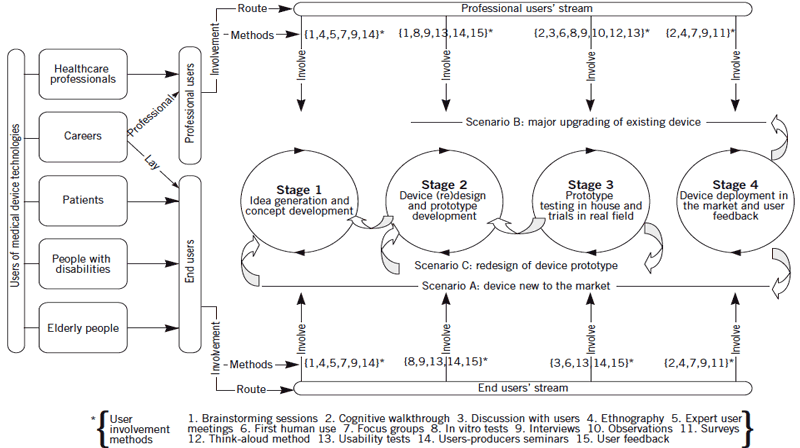
A manufacturer  must reflect in his technical file that these points have been addressed and must continuously update his technical file on this point through PMS and gather information for this purpose. For manufacturers that want to involve users more actively in all stages of a device’s life cycle but would like a structured model for this, the model developed by researchers of Brunel University that I came across may be very interesting. It looks like this:


The charm of the model is that it is well thought out in the way it fits on the boxes that must be ticked under the essential requirements (e.g. covers all user types mentioned in different stage of the life cycle of the device) and adds some options for user involvement methods. On the other hand it leaves all the flexibility a manufacturer needs to adapt his technical file to the particular device. All in all a model well worth considering for a manufacturer that is looking for a model to capture user input in all stages of the device’s life cycle.