EU Court judgment may add 6.5% customs tariff burden for parts/accessories of medical devices

And now for something completely different: customs tariffs. Dry stuff, but it makes all the difference for the price of the device. Indeed, ‘parts’ and/or ‘accessories’ under heading 9018 of the Combined Nomenclature (“CN”), or ‘articles of plastics’ under heading 3926 of the CN, that is the question. Baffled?
The case at the European Court concerned import of urine drainage bags for catheters and drainage bags for dialysers into Denmark. A dispute ensued between the importer Unomedical and the Danish customs authorities over the question whether the types of bags concerned were subject to the 6.5% customs tariff for ‘plastics and articles thereof’ under Council Regulation (EEC) No 2913/92 or to no tariff as ‘parts’ and/or ‘accessories’ for catheters or dialysers as referred to in Chapter 90 of the CN, an EU regulation that customs authorities use to classify all products for the purpose of deciding what tariff to impose. The European Court of Justice has rendered a judgment on 16 June that may have important consequences for the cost and pricing of devices by handing down a judgment in the Unomedical case that may significantly increase the customs tariffs burden for medical devices imported into the EU. A significant increase because medical devices and their accessories are normally exempted from customs tariffs.

The European Court found that the CN

“must be interpreted as meaning that a dialysis drainage bag, manufactured from plastic, which is specially designed for, and can be used only with, a dialyser (artificial kidney), had, between May 2001 and December 2003, to be classified under subheading 3926 90 99 of the Combined Nomenclature as ‘plastics and articles thereof’ and that a urine drainage bag, manufactured from plastic, which is specially designed for, and therefore can be used only in connection with, a catheter had, during the same period, to be classified under subheading 3926 90 99 of the Combined Nomenclature as ‘plastics and articles thereof’.”

The reason for the bags not being seen as parts or accessories of medical devices was that

“those bags do not enable the instruments and apparatus to be adapted for a particular operation, nor do they increase their range of operations, or enable them to perform a particular service connected with their main function. A drainage bag attached to a catheter has the sole purpose of collecting liquid drained after the catheter itself has fulfilled its own function, which is to drain the urine present in the bladder. For its part, a drainage bag for a dialyser does not enable that apparatus to perform operations other than that for which it is designed, namely that of cleansing blood.”

This reasoning does not convince me, as the reasoning is completely dissociated from the regulatory argumentation (see MEDDEV 2.1/1, p. 7) that would make the bags accessories or parts of medical devices and subject them to the rigorous safety and quality requirements of the Medical Devices Directive:

“The definition of ‘accessory’ requires that the accessory is specifically intended by the manufacturer of the accessory to be used together with a device. The intended use of the accessory must be such as to enable a device to be used in accordance with its intended use. Therefore a product can only become an accessory to a medical device if the manufacturer of such a product establishes an intended use in conjunction with one or several medical devices.”

Apparently the argumentation for whether something is an accessory or part can be completely different depending on whether the authorities can make some extra money by imposing customs tariffs or companies must put place safe medical devices on the market. This feels wrong.

Regardless however of what we think of the outcome and the reasoning, this European Court judgment is expected to have an impact on all companies importing medical devices and parts or disposables for such devices into the EU. Instead of the zero rate that applies to most medical devices, this judgment results in an increased customs duty burden of 6.5%. The European Court’s interpretation can have an impact on future imports, but may also trigger Customs to initiate audits and raise assessments in respect of past imports, as a European Court judgment establishes the law as it always has been and the court did not limit the the consequences of its judgment in time as the European Court may do. Although the judgment is limited to the facts of this case, Customs will likely try the argument on other device disposables as well as other accessories, so importers should beware and prepare.

EU Regulation on e-Labeling of Medical Devices expected to enter into force end this year

On 8 June the European Commission published a draft regulation on e-labeling as part of their WTO Technical Barriers Trade activities.

Up to now, e-labelling was problematic and regulated in a fragmented way. It was allowed up to an extent for IVDs within the guidance provided by a MEDDEV. This proposed regulation does not seem to change the rules for IVD e-labeling because the regulation explicitly applies only to the labelling of devices under directives 93/42 and 90/385. New IVD e-labelling rules may be taken on board in the currently pending revision of the IVD directive.

According to the Commission summary the scope of the draft regulation as follows:

to set out conditions according to which instructions for use in paper form may be replaced by electronic instructions for use. The regulation will limit the possibility of providing instructions for use in electronic form to defined medical devices and accessories intended to be used in specific conditions. Furthermore, it contains a range of procedural safeguards. Thus instructions for use have to be provided in paper form on request, and a specific risk assessment by the manufacturer and information on how to access to the instructions for use is needed.

This summary of course oversimplifies what the proposed regulation will actually do, so let’s take a look at it in a bit more detail. As you will see, e-labelling is not for the meek and entails a lot of organisation. In addition, there is an important e-privacy angle to it that I predict many companies will overlook.

Paper push on request obligation

First of all, manufacturers will always remain subject to paper push upon request by user, for the duration of the data retention periods discussed below, and within maximum 7 calendar days or at delivery of the device.

Scope

The regulation will impact on four things:

  1. full e-labelling, whether via a carrier provided with the device or via a website
  2. e-labelling additional to paper IFU
  3. instructions for use provided via the device itself (e.g. via the GUI)
  4. labeling of the device itself

It will only regulate this for devices intended exclusively for professional users for use by other users is not reasonably foreseeable and that fall in either of the four below categories:

  • (active) implantable medical devices and their accessories intended to be used exclusively for the implantation or programming of a defined (active) implantable medical device;
  • fixed installed medical devices covered by Directive 93/42/EEC (fixed installed medical devices being defined as “devices and their accessories which are intended to be installed, fastened or otherwise secured at a specific location in a healthcare facility so that they cannot be moved from this location or detached without using tools or apparatus, and which are not specifically intended to be used within a mobile healthcare facility”); and
  • (active implantable) medical devices and their accessories with a built-in system visually displaying the instructions for use; and
  • stand alone software covered by Directive 93/42/EEC.

Obligations for full e-labelling

As a precondition manufacturers must perform a risk assessment on their e-labelling, the outcome of which must be that “providing instructions for use in electronic form maintains or improves the level of safety obtained by providing the instructions for use in paper form” and it must “at least” include as elements:

  1. knowledge and experience of the intended users in particular regarding the use of the device and user needs;
  2. characteristics of the environment in which the device will be used;
  3. knowledge and experience of the intended user of the hardware and software needed to display the instructions for use in electronic form;
  4. access of the user to the reasonably foreseeable electronic resources needed at the time of use;
  5. performance of safeguards to ensure that the electronic data and content are protected from tampering;
  6. safety and back-up mechanisms in the event of a hardware or software fault, particularly if the instructions for use in electronic form are integrated within the device;
  7. foreseeable medical emergency situations requiring the provision of information in paper form;
  8. impact caused by the temporary unavailability of the specific website or of the internet in general, or of their access in the healthcare facility as well as the safety measures available to cope with such a situation;
  9. evaluation of the time period within which the instructions for use shall be provided in paper form at the users request.

The risk assessment must be updated with PMS information as and when that comes available, so manufacturers will need to include this in their PMS information feedback loop. As with the paper IFU the manufacturer must have a system in place to clearly indicate when the instructions for use have been revised. The regulation imposes an interesting mandatory vigilance obligation on this point: manufacturers must inform each user of the device of revisions of the IFU if the revision was necessary for safety reasons. It does not state how the users should be informed.

The regulation does not allow optional e-labelling per member state, unless justified by the outcome of the risk assessment. That means that e-labelling must be handled the same for each EU member state, unless it would be justified to make exceptions based on the risk assessment.

The regulation imposes data retention obligations and obligation to keep the e-IFU available for users :

  • for devices with a defined expiry date, except implantable devices, for at least two years after the end of the expiry date of the last produced device;
  • for devices without a defined expiry date and for implantable devices, for a period of fifteen years after the last device has been manufactured.

Since e-labelling must be fool-proof, the regulation sets out requirements for the instructions for use for the e-label.

Except for class I medical devices the notified body of the manufacturer must review the manufacturer’s fulfillment of the e-labeling requirements during the p conformity assessment. The review must be based on a specific sampling method adapted to the class and the complexity of the product.

Website

A full e-labelling website must comply with the following requirements:

  1. the instructions for use shall be provided in a commonly used format that can be read with freely available software (e.g. pdf);
  2. it shall be protected against hardware and software intrusion;
  3. it shall be provided in such a way that the server downtime and display errors are reduced as far as possible;
  4. it shall mention in which Union languages the manufacturer provides the instructions for use in electronic form;
  5. it shall fulfil the requirements of Directive 95/46/EC (privacy and data protection, see for more detail about that below);
  6. the internet address shall be stable and directly accessible during the data retention periods (see above);
  7. all previous versions of the instructions for use issued in electronic form and their date of publication shall be available on the website.

Additional e-labelling

Instructions for use in electronic form may also be provided in addition to complete instructions for use in paper form. In that case they must be “consistent” with the content of the instructions for use in paper form. If they are provided through a website, this website must fulfill part of the requirements for a full e-labelling webiste. Strangely enough the verification of consistency is not subject to ex ante notified body scrutiny as with the full e-labelling option. It will of course be subject to ex post notified body supervision in the framework of audits, so manufacturers might plan for this.

Impact on labeling of the devices themselves

Manufacturers must clearly indicate that the instructions for use of the device are supplied in electronic form instead of in paper form and that the user may request and shall obtain at no additional cost the instructions for use in paper form at any time during the retention periods set out above. That information shall be provided on the packaging for each unit or, where appropriate, on the sales packaging. In the case of fixed installed medical devices, that information shall also be provided on the device itself.

The manufacturer must provide

  • information on how to access the instructions for use in electronic form on the packaging for each unit or, where appropriate, onthe sales packaging or, in the case of fixed installed medical devices, also on the device itself. If all of that is not practicable, the information must be supplied in a paper document supplied with each device;
  • in the device or on a leaflet, information on foreseeable medical emergency situations and, for devices fitted with a built-in system visually displaying the instructions for use, information on how to start the device; and
  • in the catalogue or in other appropriate device information support, information on software and hardware requirements needed to display the instructions for use (my guess is that this could also well be done somewhere in the documents comprising the label).

e-Labelling via the built-in GUI of a device

The draft regulation also deals with provision of instructions for use in electronic form by the device itself. Apart from that this is subject to all of the above, manufacturers of medical devices fitted with a built-in system visually displaying the instructions for use must ensure that displaying the instructions for use does not impede the safe use of the device, in particular life-monitoring or life-supporting functions. I think an example of this would be pop-ups with ‘useful’ troubleshooting tips that obscure vital information on the screen and cannot be easily closed. Fulfillment of this requirement will certainly impose additional emphasis on usability engineering requirements of the GUI of these devices and application of risk management to the software design process. Also,  the instructions for use in electronic form must also be made accessible to the users through a website, to which all of the above criteria apply.

Don’t forget the personal data rules impact

The draft regulation contains multiple references to the EU directive on the protection of personal data. This is to be expected because there will inevitably be an exchange of personal data between the manufacturer and a doctor or other HCP for the purpose of the provision of e-labelling and the PMS process related to that. That means that the processing of the personal data acquired has to meet all these general requirements, like no export from the EU except if allowed, use of data only within the scope of consent, procedures for correcting data, etc.

But let’s not forget about other important data protection issues apart from the legacy EU data protection directive. The  revised e-Privacy Directive that entered into force last May establishes, apart from all the upheaval about its cookie acceptance rules, for the first time in the EU, a mandatory personal data breach notification framework. This framework applies by the letter only to providers of publicly available electronic communications services (e.g., communications and Internet access providers). However, the EU Commission has already indicated that it will soon propose e-privacy legislation that will cover the entire scope of the providers regulated under the broader EU Data Protection Directive (yes, 95/46/EC, the one referred to in the draft regulation). Furthermore, recital 59 of the e-Privacy Directive encourages EU member states, while new EU Commission rules are in the pipeline, to apply the new data breach rules very liberally, “regardless of the sector, or the type, of data concerned.” – ergo, e-labelling by medical devices manufacturers will soon fall under the e-Privacy directive and may already do so, depending on what EU member state you ask. I would say that compliance with the data breach rules will also need to be looked at by the notified body in the framework of its assessment of a manufacturer’s e-labelling as this is very clearly a safety and PMS issue.

Under the new rules, providers must notify — without undue delay — individuals and authorities when they suffer a data breach. Individuals must be notified if the breach is likely to adversely affect the personal data or privacy of such individual. Regardless of the potential harm, all data breaches must be reported to the authorities. The notification should describe the nature of the breach, list the provider’s contact information and recommend measures to mitigate possible adverse effects. The notification to the competent national authority must also describe steps taken by the provider to address the breach.

Notification of a personal data breach to an individual is not required, however, if:

  • the provider has demonstrated to the satisfaction of the competent authority (in this case the one for data protection, but a manufacturer will need to inform the notified body too and that may too have an opinion on this) that it has implemented appropriate technological protection measures;
  • the provider applied those measures to the data impacted by the security breach; and
  • the technological protection measures render the data unintelligible to any person not authorized to access it.

Both the scope of providers covered by the reporting requirements and the appropriateness of the technological protection measures are expected to diverge in implementation by the various Member States, making the jurisdictional issues very important because forum shopping may become an attractive option until these concepts are further harmonized.

Time path for entry into force

The regulation is proposed be adopted on 14 december this year and to apply as of 1 year after that date. This transitional period should be used by e.g. the manufacturers that are impacted by the user interface requirements to update the functioning of the GUIs and to get their e-labelling procedures in order.

More on advertising of medical devices – much more

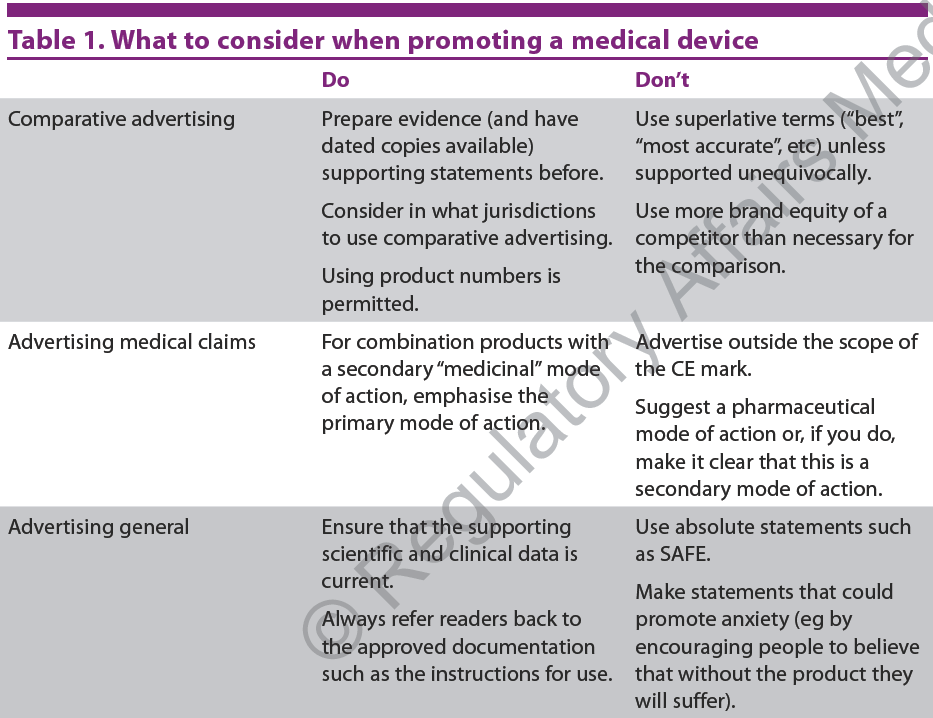
As I have written before on this blog, medical devices are spectacularly unregulated by medical devices specific EU legislation when it comes to advertising and marketing. That does not mean however that no rules apply to to advertising and marketing for medical devices. Many general EU statutes regulate advertising and marketing for medical devices one way or the other. At the same time the national approach to advertising differs quite widely. To highlight how companies can deal with this, I decided to organise a seminar about it with the same colleagues as with whom I wrote the article referenced in this post, which was well received and attended by many (especially via the simultaneous webinar). The seminar presentation can be found here. I will post the recording of the webinar when we have finished the remastering.

The first step of course is to determine if the statement a company wishes to make is advertising in the first place. Any statement that is not advertising is information subject to the full protection of Although there is no case law about advertising of medical devices specifically at the EU level, there is plenty about the scope of the concept of advertising and its borderline with information in the field of medicinal products. A recent presentation of mine on the subject is here (sorry, in Dutch only – if enough people request a translation I may translate it).

The most recent case law of the EU court in the field of medicinal products advertising provides some interesting additional pointers (some of the nuances will be lost in the below summary and translation from medicinal products law to medical devices law, so I recommend to always read the referenced cases yourself).

Damgaard – a statement does not necessarily have to come from the manufacturer to be considered (regulated) advertising, and may even originate from a completely independent journalist. Add to this (in my view) patient group, CRO recruiting for a clinical trial, etc. The decisive criterion is its ‘promotional objective’.

MSD – the faithful reproduction of the packaging of the medicinal product as well as the literal and complete reproduction of the package leaflet or the summary of the product’s characteristics, which have been approved by the authorities with competence in relation to medicinal products. Any information relating to a medicinal product which has been selected or rewritten by the manufacturer, which can be explained only by an advertising purpose, is however prohibited. The reproduction of such information on a website is allowed, as long as it is not actively pushed to the consumer.

Novo Nordisk – For advertising aimed at healthcare professionals quoting to stay permitted advertising the information given does not need to be identical to that in the SmPC (or in case of medical devices: label), provided that such information, firstly, may not be misleading and is to encourage the rational use of the medicinal product, by presenting it objectively and without exaggerating its properties. Secondly, it must be accurate, up-to-date, verifiable and sufficiently complete to enable the recipient to form his or her own opinion of the therapeutic value of the medicinal product concerned. Finally, quotations, tables and other illustrative matter taken from medical journals or other scientific works are to be clearly identified and the precise sources indicated, so that health professionals are informed of them and can verify them.

Alter Channel – (not about medicinal products but about cosmetic dental treatment) It doesn’t matter if the promotional statements made (in this case on TV) were paid for or not for them to constitute advertising.

Although none of these cases deal with advertising and marketing of medical devices, consistent application of EU law to similar situations would dictate that the same principles as described above apply.

Outlines of the medical devices Recast become more fixed with Council conclusions

Since the High Level Meeting end of March where the Commission outlined its plans for the Recast of the Medical Devices Directive and took stock of the feelings about it in the industry, the project has been moving forward in the political channel. It has to if the Commission wants to be able to present a proposal that has a chance to succeed early 2012 as currently envisaged. For a proposal to succeed in the legislative procedure it need to have the backing of the EU member states, represented in the Council.

The Council has recently discussed the results of the High Level Meeting in the 3095th Council meeting on Employment, Social Policy, Health and Consumer Affairs – Health issues and has indicated where it thinks that devices legislation in the EU should go, providing an important signal to the Commission what elements are accetable for the member states in the upcoming proposal.

The conclusions reached by the Council are very much in line with those reached by the Commission further to the High Level Meeting, showing that the member states and the Commission are roughly in line about what the proposal should be. That’s not surprising, given the amount of discussion that preceeded this at adminstrative level in Brussels.

The conclusions of the Council

The conclusions of the council give us more bearing on what the Recast will look like. Here are some of the policy aims stated that I find particularly interesting:

  • Particular attention to interoperability and safety issues related to the integration of medical devices in e-Health systems, especially Personal Health Systems and mobile health systems (m-Health) while bearing in mind that the deployment of health ICT systems is entirely a matter of national competence;
  • Encourage better consideration of the needs of patients and healthcare professionals in the design process of medical devices;
  • Considering further improving the involvement of patients and healthcare professionals in vigilance in order to improve the system of notification of adverse incidents relating to the use of medical devices;
  • Promotion of early dialogue between manufacturers, scientific and clinical experts, competent authorities and, where appropriate, notified bodies regarding “new products” in particular, and their classification;
  • Particular attention to interoperability and safety issues related to the integration of medical devices in e-Health systems, especially Personal Health Systems and mobile health systems (m-Health) while bearing in mind that the deployment of health ICT systems is entirely a matter of national competence;
  • Encouraging better consideration of the needs of patients and healthcare professionals in the design process of medical devices;
  • Consider further improving the involvement of patients and healthcare professionals in vigilance in order to improve the system of notification of adverse incidents relating to the use of medical devices;
  • Promote of early dialogue between manufacturers, scientific and clinical experts, competent authorities and, where appropriate, notified bodies regarding “new products” in particular, and their classification; and
  • Enhanced cooperation between authorities of relevant sectors.

This should result in inclusion of the following elements in the Recast proposal (again, a selection of mine of points that particularly interest me personally and professionally):

Improved risk based classification

Council conclusion: The system of risk based classification should be improved (in particular for in vitro diagnostic medical devices and “new products” as appropriate).

This is not that surprising, given the discussions that have been going on about the current classification methodology, which is not risk based at all for in vitro diagnostic devices and seen as insufficiently precise for medical devices in general.

Clinical data

Council Conclusion: Clinical data from pre-marketing studies and post-marketing experience (vigilance reports, post-marketing clinical follow-up, European registers) must be collected in a transparent way and to a greater extent in order to provide the clinical evidence which fulfils regulatory purposes and can, where appropriate, assist health technology assessment, whilst fully recognising and respecting national competences for the latter.

This signifies a much needed increase in emphasis on clinical support of the safety and efficacy of medical devices. Although incremental improvements were made with the revision under Directive 2007/47 with the increased demands regarding clinical evaluation, the Recast will likely take an additional step in this respect. In my view, this a response to the growing criticism that the EU allows devices onto the market that have too little clinical substantiation at that their time of market entry. Stricter  requirements on pre- and particularly post marketing clinical data will strengthen the fast track to the market that makes the EU system so successful by making sure that manufacturers actually do meet their PMS obligations and improve the underlying clinical material for their devices.

Notified bodies

Council Conclusion: Consideration should also be given to methods for ensuring that notified bodies are better equipped with the appropriate expertise to analyse such data in a meaningful way.

This again is a response to in some cases well-deserved criticism. Notified bodies, in my experience, are sometimes stretched too thin in the expertise that they actually employ and often need to resort to contracting out a significant amount of work to external experts. The expert’s recommendations are then only appreciated marginally so the notified body may take a certfication decision based on recommendations it may not fully understand itself or cannot explain to the manufacturer. An important step in the right direction was made by the signatories to the Code for Notified Bodies, which among other things imposes requirements on the expertise that notified bodies must have and timelines they should meet.

Supervision

Council Conclusion: There is a need for clearer and simpler rules defining the obligations and responsibilities of all economic operators and the role of other stakeholders (in particular national competent authorities and notified bodies).

Although it is not completely clear what shape these rules will take, this refers to the system of post marketing surveillance that works less than perfect. in my experience member states’ competent authorities are woefully understaffed for the supervision of medical devices compared to the resources available for medicinal products supervision. Also, the legal status of acts of notified bodies is often not clear (is it an administrative act by a body with supervisory powers or is it performance under a civil law contract between two private parties?).

Information sharing / EUDAMED

Council Conclusion: The development of a modern IT infrastructure for a central and publicly available database must be further pursued with a view to providing key information about medical devices, relevant economic operators, certificates, clinical investigations and field safety corrective actions. In this context, the possibility of introducing a system to improve the traceability of devices, thus enhancing safety, must be studied.

This is a respsonse to the criticism that traceability is problematic in the medical devices sector and that information about what medical devices are approved for what purposes is difficult to find, if available at all. Indeed, traceability can be improved a lot in the devices industry and again the medicinal products industry is ahead in developments in this field. So, the expectation is that the recast will legislate in that direction. There are some initiatives underway already (like the UDI), and it will be interesting to see what place such initiatives will get in the Recast proposal. My firm educated expectation is that the EUDAMED database will be expanded for this purpose and will be partially open to the general public.

Definition / classification

Council Conclusion: Where necessary, clarification should be made regarding the definition of medical devices and the criteria for their classification. In addition, a simple and rapid mechanism must be set up for accelerated adoption of binding and consistent decisions and the implementation thereof on the determination of products as medical devices and the classification of medical devices in order to address the growing number of “borderline” cases between medical devices and other products subject to different regulatory frameworks (the framework for pharmaceuticals in particular, but also those for cosmetics, aesthetic products, food or biocides).

An important item with the developments of convergence of medical devices, medicinal products and ATMPs, with companion diagnostics and combination products as very striking examples. This item will likely be followed up along the lines of the Dutch initiatives to create an EU variant of the US office of combination products. Hopefully more work will be done on the definition of medical device with respect to software, although I expect that this will not go further than the pending work on an interpretational document on software that is currently in the works.

Notified bodies oversight

Conclusion Conclusion: As regards the oversight of notified bodies, there is a need to continue to improve the harmonised list of criteria to be satisfied before their designation. In particular the designation process should ensure that they are designated only for the assessment of devices or technologies which correspond to their proven expertise and competencies. The process should also address the need to improve monitoring of notified bodies by national authorities in order to ensure an EU-wide comparable and high-level performance of notified bodies, in this context an enhanced European coordination between competent authorities as well as between notified bodies should also be considered.

This is about the diverging difference in quality of notified bodies and doubts about whether some member states are issuing accreditation decisions based on sufficient due diligence and supervision of the notified bodies. Also here there is a big problem with the often insufficient resources and expertise that member states make available for supervison of notified bodies. the EU is now thinking about a way to create some kind of supervision mechanism of notified bodies on an EU level, and given the outcome of the High Level Meeting some options have at least been struck off of the list (like the EMA solution of locating this supervision at the EMA). The fact that the member states now support moving the supervision of notified bodies to an EU level means it will happen. What it will look like is still not clear. I don’t expect (de)accreditation by an agency at EU yet, but more someting like a procedure along the lines of the current safeguard procedue under the medical devices directive for revocation of CE marking of specific devices. Hopefully such a procedure will be quicker and more effective than that.

Vigilance

Council Conclusion: The vigilance system for medical devices must be further developed in order to allow a coordinated analysis and a rapid and coherent EU-wide response to safety issues, if needed.

As discussed above, vigilance must be improved and can be improved. EUDAMED is an important step in the right direction by making sure that all authorities have the same information. In addition I think the system could be made a lot more effective by developing the possiblity to nominate a coordinating authority for individual vigilance issues that play in multiple member states, as described in the Vigilance MEDDEV guidance document.

Regulatory gaps

Council Conclusion: It should be considered how to address regulatory gaps in the system, for instance in relation to medical devices manufactured utilising non-viable human cells and tissues.

This a well-known regulatory gap, and it should be addressed. Other well known gaps are for example also the purely cosmetic implants other than breast implants.

Instructions for use (e-labelling?)

Council Conclusion: The need for introducing more harmonised provisions relating to the content, presentation and comprehensibility of the instructions for use of medical devices should be further considered.

The big ticket issue here is of course the question whether e-labelling will finally be allowed and under what conditons. Important considerations will be the type of end-user may be provided an e-labelled device, what the requirement for the e-label will be and in what language(s) they will be allowed. Also, I could imagine that it would be incredibly useful to oblige manufacturer to make the most recent version of the instructions for use for available via the internet additional to the paper version.

In conclusion

The Council document provides an important outline of whatbthe Recast proposal will look like. Of course the finessess will be hashed out in the period between now and beginning 2012. Then the Parliament will have the opportunity to propose amendments and I am sure the lobbying efforts for that have started already. So, we’re not there yet, but we seem to know where approximately we are going: to a welcome opportunity to optimise a regulatory system which, although it has received merited and unmerited criticism, is and will continue to be a success compared to other systems.

The European Commission’s blueprint for Intellectual Property Rights – what’s in it for the medical devices industry?

The Commission has decided that the existing mix of European and national rules are no longer adapted and need to be modernised. As IP lawyer I welcome this initiative. Although I have always found the IP rules sufficiently flexible to address any problem, enforcement and interpretation are real problems with diverging national and EU IP rights and the costs of transactions (licensing for example) can be substantial. That is why the Commission has recently adopted a strategy to revamp the legal framework in which IPR operate and to adapt it to the new circumstances.

The strategy deals with many issues to cover all IPR comprehensively, and the Commission’s communication setting out the stategy contains a neat roadmap with the estimated times of initiative for the respective proposals. The IPR Strategy sets out a series of short- and long-term key policy actions in various areas which include (insofar as relevant to the medical devices industry):

Patents

The Commission already launched proposals in April for a unitary patent protection under enhanced cooperation. Meanwhile, it now announces that work will continue on proposals relating to the creation of a unified and specialised patent court for the classical European patents and the future European patents with unitary effect after the first version was shot down by the European Court. If the EU succeeds in producing s workable framework that its own Court can agree with, this would reduce litigation time and costs as well as increase legal certainty for business. Obviously, patents are crucial for the devices industry, while the costs of multi-jurisdictional litigation in Europe can be very to almost prohibitively high with the risk of diverging judgments in different jurisdictions.

Trade secrets and know-how

The protection of trade secrets varies widely among the different EU member states and protecting collections of substantial, identified and secret technical and/or procedural information (e.g. the contents of a technical file or description of a quality system) is a big problem, even though the subject is harmonised at a very high level under the TRIPS Treaty. The Commission acknowledges this but needs more time to study the problem. It therefore does not propose immediate measures in this respect but announces that it will “pursue its reflection and gather comprehensive evidence before taking a position on a possible way forward”. This is an important subject for the medical devices industry to watch and lobby on (the Commission is after all still considering the options) as the industry does not have any form of regulatory data protection as the medicinal products industry has in the EU. Also, know-how and trade secrets play a very important role in the industry so better regulation of its protection would benefit companies large and small.

Trade marks

The Commission intends to present proposals in 2011 to modernise the trade mark system both at EU and national levels and adapt it to the Internet era. This may include not only simplifying and speeding up the registration procedure, taking into account the requirements of the electronic age, but also “increasing legal certainty, such as by redefining what may constitute a trade mark”. I am not sure what  redefining the scope of what may constitute a trademark will entail in terms of legal certainty, but it will mean that companies may need to revisit or take a closer look at their trademark strategy.

Geographical indications (GIs)

GIs secure a link between a product’s quality and its geographical origin. However, there is currently no such system available at EU level for the protection of non-agricultural products such as Carrara marble or Solingen knives, or, why not, MRI scanners from the Netherlands or hip replacements made in Germany. The Commission is considering proposing EU legislation in this field. It will be very interesting to see where this goes and what connections there are in the devices industry between devices and geographic areas.

Multi-territorial copyright licensing

While the substantive scope of copyright has been largely harmonised, rights are still licensed on a national basis, software copyright being a case in point for the devics industry here with the way devices and eHealth services are currently developing. In the 2nd half of 2011, the Commission will submit a proposal to create a legal framework for the efficient multi-territorial collective management of copyright and it will also establish common rules on the transparent governance and revenue distribution. Although the copyright measures seem to be mainly aimed at the audiovisual and entertainment industry business models, they may impact the devices industry where it uses their sales channels and with respect to the plans to regulate user generated content (interesting in case of patient / end user feedback customization / improvements of devices software).

IPR infringement

Counterfeiting and piracy are a growing threat for the economy. Although counterfeiting is more prevalent in e.g. medicinal products for the moment, it is expected that also the medical devices industry will become more affected. The Commission is set to intensify its efforts in this area. Firstly, the Commission has tabled a regulation that is to reinforce the European Observatory on Counterfeiting and Piracy, which it launched in 2009, by entrusting its tasks to the Office for Harmonisation in the Internal Market (OHIM). This will allow the Observatory to benefit from OHIM’s intellectual property expertise and strong record of delivery in trade marks and designs. The Regulation now passes to the European Parliament and the Council for consideration. Secondly, in Spring 2012, the Commission will propose to revise the IPR Enforcement Directive (see here for the underlying discussions). The Directive provides for civil law measures allowing right holders to enforce their intellectual property rights but should be adapted, in particular to meet the specific challenges of the digital environment, and, I would add, the sometimes spectacularly diverging way in which the national courts apply it.

IPR enforcement by customs

Customs supervise all trade crossing EU external borders: they carry out controls for many purposes and have an essential role in fighting the trade in IPR infringing goods. As part of today’s overall IPR strategy, the Commission also proposes a new customs regulation, to further reinforce the legal framework for customs’ actions. The proposal also aims to tackle the trade in small consignments of counterfeit goods sent by post as the overwhelming majority of these goods results from internet sales. This will be of particular interest to the in vitro diagnostic devices industry that suffers from counterfeit self tests sold over the internet. Involvement of customs can also be used for other reasons, such as (post) market surveillance pursuant to Regulation 765/2008. Combining a strategy of involvement of customs in market surveillance and anti-counterfeit action can be a very powerful tool for a devices company, as this allows for a two-pronged approach based on safety/conformity issues and IP rights.

In summary

In summary, a very ambitious agenda and hopefully one that will bear the aimed for fruits. The medical devices industry will surely stand to gain from these initiatives. You can keep track of the whole agenda using the convenient time table in the back of the document.


Critical analysis of the European Society of Cardiologists’ report on medical devices problems, and its proposals for reform

Reader warning: this will be a longer-than-usual post, because I did not have time to write a short one (to cite the many philosophers and writers credited for this quote).

The European Society of Cardiology has issued a report of a policy conference held end of January this year, published in the European Heart Journal on 14 May 2011. The report, entitled “Clinical evaluation of cardiovascular devices: principles, problems, and proposals for European regulatory reform: Report of a policy conference of the European Society of Cardiology” discusses a number of case studies of clinical outcomes for certain groups of devices and devices enabled therapies (heart valves, percutaneous coronary interventions, diagnostic imaging, cardiovascular implantable electronic devices and closure of the foramen ovale) to arrive at a number of conclusions and recommendations with respect to the existing regulatory framework for medical devices in Europe.

As a first point, I think it is a very important development that the medical profession makes its voice heard in the debate about the revision of the medical devices rules and it is good to see that it is doing that more and more. Healthcare professionals, as everyone in the industry recognizes, play a vital role in the development and post marketing surveillance of medical devices. Any contributions to the debate from that side are to be encouraged, to be appreciated and to be followed up on where necessary.

On the other hand, some criticism is warranted as well, which I will give below, because the arguments proffered by clinicians reveal a lack of knowledge about the applicable rules and a slight bias towards medicinal products legislation as the only good system to regulate ‘medical’ products. For example, in a recent TV program about alleged corruption in the medical devices industry in the Netherlands, many of the surgeons interviewed made statements about medical devices regulation that were completely incorrect (e.g. ‘There is no regulation in place for market access of medical devices. It is about time that the government moves on that.’). In the recent BMJ publication that discussed the quality of the medical devices system similar incorrect statements are made, e.g. that it s impossible to tell by which notified body a product was evaluated (that notified body can be identified by the notified body number next to or underneath the CE sign). Evidently there is a lot to learn on all sides of the debate. Let’s look at the report.

The case for reform set out in the report is made based on five major issues identified (Complexity of the legislative framework, Regulatory gaps and need to clarify boundaries, Weakness of the clincal data requirements, Accountability of the Notified Bodies and Insufficient use of expert medical advice).

Some of the reasoning underpinning the issues identified is better than other. First, the arguments made about complexity of the legal framework raise the exact same criticism as one could make with respect to the medicinal products framework: too complicated, no uniform application by national authorities and notified bodies, difference of quality between the application of the rules by different actors. The report refers to the pharma framework as a “unified system” that would solve these problems. I think this is only partially true. Even in the case of the even more complicated and more highly regulated pharma system there is difference of application between authorities and authorities sometimes even question each other’s safety assessments (while mutual recognition of those is the core of the decentralised procedure system).

Secondly, the arguments that “some new technologies are not regulated by the existing texts” are just wrong. The report refers to software for diagnostic purposes as an example of such inclarity while this is regulated under the medical devices directive beyond reasonable doubt. Certainly with respect to software the general unfamiliarity on the part of the clinical profession with the existing rules for software that I have discussed before sounds through in this report as well. It further states that borderline products are problematic, because it is not always clear by which directive they are governed. This is true, but certainly not solved by any of the recommendations made at the end of the report. Demarcation issues are inherent to the process of therapeutic convergence between medicinal products, medical devices and advanced therapy medicinal products that we are currently experiencing. It would help in this respect if the authorities would be public in their reasoning for classifying a certain product one way or the other. For example, I really do not understand why the EMA does not make the reasoning for its classification decisions with respect to ATMPs public because the summaries provided presently are not helpful at all.

The third criticism concerns the fact that the medical devices system does not prescribe in detail how and when clinical evaluation must be performed and that there is too much reliance on post marketing registry studies. This is an inherent point of the EU medical devices system and recently point of criticism from the US too (‘EU uses its patients as guinea pigs’). However, it has been empirically proven that this does not lead to unsafer devices being approved.

Fourthly, the report criticizes the accountability of the notified bodies and their differing levels of quality. This is a point that everyone agrees with and will be addressed in the recast. It has also been addressed by the notified bodies themselves through the recent implementation of their new code. However, also in this respect it gets the law wrong on points. It states that the responsibility for approving PMS belongs to the notified bodies rather than the competent authorities, suggesting that authorities play no role in PMS for medical devices. This reasoning is incorrect and appears to derive from the pharma system where approval of the PMS system is part of the marketing authorisation issued. Article 10 of the medical devices directive for example contains a very specific obligation on member states to record and evaluate PMS information.

Finally, “concerns have been expressed that there is dialogue between manufacturers and regulatory authorities but academic clinicians are rarely involved.” This is interesting, because a large amount of criticism directed towards the medical devices industry concerns the perceived tight relationships between the industry and clinicians. Many voices are actually clamoring for less involvement of the clinicians in the regulatory process. The industry, for its part, repeats time and again that it cannot develop products in a clinical vacuum, and therefore needs clinicians’ input, both pre- and post market. The report’s conclusion that “the EC is not involved in individual clinical evaluations or approvals of particular devices (which are the responsibility of member states and NBs) and so there is no coordinated system for obtaining detailed professional advice concerning new high-risk devices.” seems odd, because the new requirements for clinical evaluation of high risk devices under directive 2007/47 require a higher standard of clinical substantiation of the device, which presumes more involvement of clinicians because of increased need for clinical investigation.

In conclusion, the report provides valuable input for the debate but not always a correct reflection of the rules in force, which detracts from the authority of the report to a point. I noticed the same in the recent BMJ publication concerning medical devices regulation, which contains a number of incorrect statements regarding the rules, for example that one cannot see what notified body approved a particular device (incorrect, that notified body can be identified by the notified body number next to or underneath the CE sign). Fortunately recommendation no (12) of the report is that physicians should understand and engage with the regulatory system for medical devices. It is up to the industry I think to take up this gauntlet and engage in more active discussions with the clinicians.

Given the misunderstanding of points in the regulatory system some of the recommendations made are superfluous as there are already part of the EU medical devices system, such as

(3) The classification of each type of device should be based on a detailed evaluation of risks (it is, see the classification annexes of the medical devices directives, although admittedly this is not the case for IVDs yet but will likely be after the IVD directive changes);

(8) Outcome studies after device implantation should be undertaken as a partnership between physicians, companies, and regulators (they invariably are because manufacturers need the input of the clinicians applying the devices and many contract clinicians for this purpose);

(9) Limits to iterative changes should be defined (they are defined in the technical file by means of the scope of the CE mark and the duty to discuss changes with the notified body to determine if the change requires an update of the technical file);

(10) Regulatory systems should retain flexibility for special circumstances (e.g. special indications) (there is, because a manufacturer decides the scope of application of the device in his declaration of conformity underlying the device); and

(11) Manufacturers should be responsible for the clinical evaluation of all class II and class III devices (they are, see e.g. Annex X of the medical devices directive).

The other recommendations show a strong desire to move towards a unified pharma-type system as set up for the EU centralised procedure. I am not sure if that will solve all the problems and it is certainly not where the Recast of the medical devices directives is going as far as I know at the moment. A lot more can be said about this and I have even skipped the interesting discussion on the transparency of technical files raised in the report, which is a problem but one not only related to the medical devices system, see just one of the recent European Ombudsman cases concerning transparency of EMA MA application dossiers.

In summary, the report underlines the need for the industry and the clinicians to bridge the evident gap between them and to talk to each other more, and foremost: to explain to each other how they work, why things are done in a certain way and by what rules they are bound. A better understanding of each other’s perception of the rules and how they should be applied will improve the quality of the discussions about improvement of the regulatory system for everyone’s benefit. Subsequently, improvements can be made on a unified understanding of the rules and improvements required.

New global business compliance statement for medical devices industry

At the International Medical Device Industry Compliance Conference today nine medical devices branch associations from around the world committed to further advance ethical behaviour globally by signing the “Global Compliance Statement on Interactions Between Medical Technology Companies and Healthcare Professionals (HCPs).” The assocations concerned are AdvaMed, Eucomed, EDMA, COCIR (European Coordination Committee of the Radiological, Electromedical and Healthcare IT Industry), IMEDA (International Medical Devices Manufacturers Association), MEDEC (Canadian medical technology industry association), MTAA (Medical Technology Association of Australia), Medical Technology Association of New Zealand and SAMED (South African Medical Device Industry Association).
The statement does not concern a new code but rather a statement that the principles on which each of the assocations’ codes are based are identical and a commitment to work together to promote these standards. These principles are well known to everyone in the compliance field: transparency, documentation, equivalence and separation. Since these principles are already present in the codes of all assocations that signed the statement, it is not a giant step in substantive terms. However, the symbolic and political value is what counts, as well as the platform this provides to build on for the future, as the associations also commit to

Promote ethical interactions among companies and HCPs by encouraging companies to adopt compliance programs and policies consistent with the applicable industry codes;
Provide guidance to the medical technology industry at large on ethical business conduct relating to companies’ interactions with HCPs;
Support education and compliance of companies with all applicable laws, regulations or professional codes (including national association codes) that may impose more stringent requirements, relating to companies’ interactions with HCPs; and
Work together to advance ethical collaborations consistent with the respective codes globally, through regular communication, joint policies (where appropriate), joint activities, and other appropriate collaborations.

So, the true progress is made in these fields, as this statement makes business compliance a truly global issue by providing a global structure for further development of harmonised rules throughout the geographic scope in which their members are active. If the associations succeed in maintaining this momentum and the positive energy in the room at the conference where the statement was signed, great things may be achieved.

Improving implementation: the Code for Notified Bodies

It’s finally public: the Code of Conduct for Notified Bodies under Directives 90/385/EEC and 93/42/EEC “Improving implementation of the European CE certification of medical devices through harmonization of quality and competence of Notified Bodies”. It has been much awaited (see here, here and here for example) and in the end has been authored by BSI, DEKRA/KEMA, LNE/G-MED, TÜV Rheinland and TÜV SÜD. Other notified bodies are invited to join.

Apart from a general statement and general principles of conduct the Code contains  rules on:

  • Implementation and monitoring of the Code of Conduct;
  • Qualification and Assignment of Notified Body Assessment Personnel;
  • Minimum time for Notified Body assessments;
  • Sampling of class IIa and IIb technical files;
  • Design Dossier Reviews;
  • Rules for subcontracting; and
  • Rules for Certification Decisions.

The authoring notified bodies aim to address the current weaknesses in the notified body system with this code, more particularly

“to ensure a harmonized quality of work amongst the participating Notified Bodies, to gain trust in this work in public perception as well as from political and policy stakeholders, to contribute to ensure the trustworthiness of the system amongst international partners of the European Union and to support the reputation of the participating Notified Bodies.”

Interesting features I found are the following.

Scope

There is the scope of the Code. It states as non-limitative list of topics that still need to be addressed:

• Incorporating of the IVD Directive

• Defining requirements for review of devices incorporating material from animal / human origin

• Covering the Conformity Assessments defined in MDD Annex III or AIMD Annex 3 (Type Examination) as well as MDD Annex IV or AIMD Annex 4 (Batch Verification)

• Differences between Notified Bodies in review of clinical evaluations according to MEDDEV 2.7.1

• Requirements for Own Brand Labeling (OBL) manufacturers.

Board of Compliance

The notified bodies intended to take non-compliance with the code seriously and announce to set up a Board of Compliance and accompanying enforcement measures before 1 January 2012. I would imagine that they could easily adapt the Eucomed Code of Ethical Business Practice’s procedural framework. although there might be advantages of embedding the Code in the national notified body accreditation decision one way or the other. In any event the Board of Compliance implementation should seek to avoid the situation that the Eucomed code has been in since its enforcement mechanism was set up: no enforcement except clarification on its own accord because no one complains about each other. Whether that will be the case will depend on what parties will have standing to file complaints or request enforcement. I can imagine that notified bodies are not enthusiastic about their customers suddenly having recourse other than contractual against their notified body. On the other hand, notified body services contracts are normally imprecise on the exact notified body service level that the Code would be a very welcome addition.

Time limits for audits

It is a good thing that the notified bodies agreed on time limits for notified body assessments in the Code based on the principles of IAF MD5:2009. This will make the audit durations a lot more predictable for companies, allow for better planning and subsequently smoother cooperation. Although the time limits are not set in stone and depend on many factors that may cause the notified body to adjust the duration, it is a good start that there is a methodology to start from and that the factors that influence the duration are transparent.

Subcontracting

It is not a secret that not all notified bodies have all expertise in house at all times and that they may therefore need to subcontract parts of the review to third parties. This is addressed in the Code as well. Subcontracting takes place under the full responsibility of the notified body, as the Code states that it considers separate accreditation or designation of subcontractors not necessary. In my view this remains a weak spot that member states must watch. A notified body should not be too dependent on subcontractors. This has been addressed to a point by defining a core competence of notified bodies by identifying what processes may not be outsourced:

“The qualification of personnel involved in the Conformity Assessment cannot be outsourced. Decisions on qualification, suspension, withdrawal and renewal ofsenior staff of the Notified Body meeting the same requirements as staff taking certification decisions.”

This is elaborated upon in the certification decision paragraph:

“To ensure that the Notified Body has sufficient internal competence among its own staff to take certification decision and not rely solely on external expertise for certain product categories, the following requirement applies also. This competence shall be related to the scope of designation of the Notified Body for the product categories as defined in NBOG document 2009-3 (e.g. MD 0200 Non-active implants).

• For each product category (e.g. MD 1100) for which the Notified Body is designated, there shall be in-house product expertise by having at least one qualified Product Assessor or Product Specialist in that product category.”

And?

Are we fully there now and are all problems remedied? I think this will depend to a large extent on how many and moreover which of the other notified bodies subscribe to the code and how the Board of Compliance works in practice. As Eucomed has shown, having a Board of Compliance is one thing, but getting companies to use itis another. The more precise commitments on the service level of a notified body will benefit the medical devices industry and in the end the end users and patients, especially if courts are willing to have resort to these in case of disputes between non-signatory notified bodies and their clients, as well as member states that may make observance of the Code a condition for accreditation as notified body.

Advertising and marketing of medical devices in the EU: seminar/webinar 8 June in Amsterdam

Advertising and marketing of medical devices is a subject I see many clients struggle with. Unlike with medicinal products EU law in the field of advertising and marketing is almost not harmonised. Consequently multi-jurisdictional advertising and marketing campaigns are difficult for companies, as they need to take a lot of different national laws into account, as I and colleagues have described in this article. To provide some clarity for those interested I thought it would be a good idea to organise a seminar / webinar on the subject, please click here for your invitation.

Given the very different enforcement climates in different EU national jurisdictions I have invited Alexander Denoon from the UK and Mathias Klümper from Germany, both partners in life sciences niche firms, to join as speakers. We will bring you up to date on the latest EU law developments in the field, as well as discuss how you can avoid the regular pitfalls with international advertising and marketing for medical devices in the EU. There will be ample opportunity for questions of course.

If you cannot make it in person, you can always consider attending the webinar. Any interested is welcome to attend, whether in person or in the webinar, so feel free to forward the invitation to whomever you think might be interested.

Eudamed enters into full force

The European Database on Medical Devices (Eudamed) is now finally upon us. As per article 6 of the Commission Decision establishing the Eudamed database, EU member states must apply the decision as of 1 May 2011. Eudamed becoming operational at last after having been a possibility referred to in the medical devices clearly marks the Commission’s and member states’ commitment to improve market surveillance for medical devices in the EU as a prelude to the impending Recast of the medical devices directives, by making sure that all authorities record and have access to certain market surveillance data. Whether, under what conditions and to what extent other parties, e.g. notified bodies, might have access to that database is still under debate as far as I can determine.

Vigilance and clinical investigation data

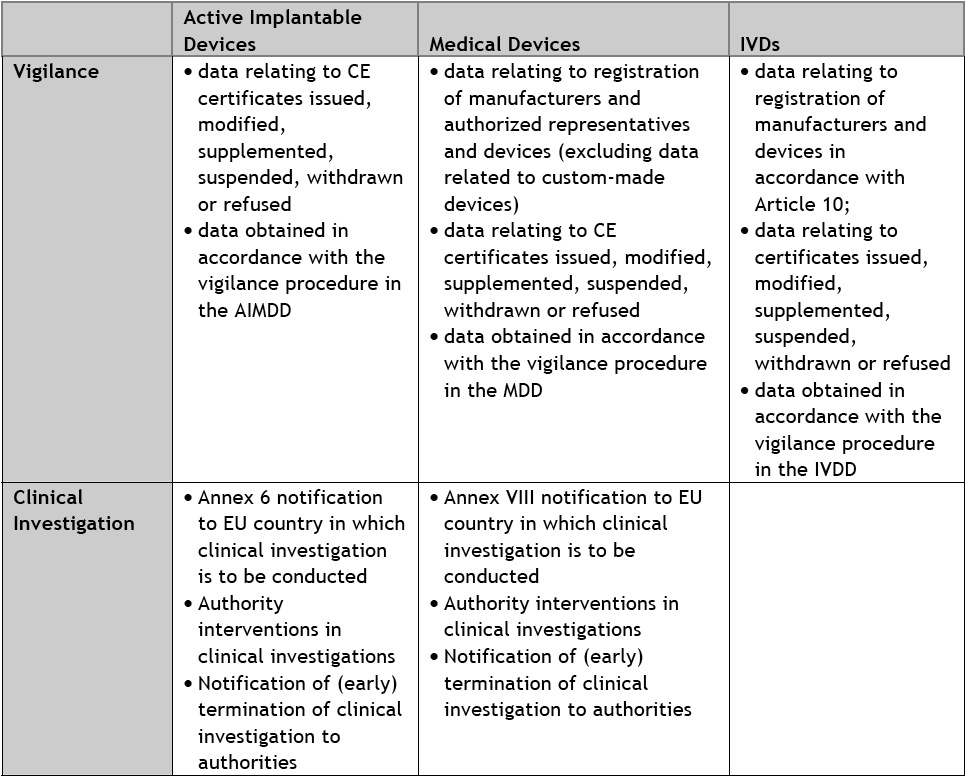
What will this entail? The decision obliges them to use the European Database on Medical Devices (Eudamed) to record vigilance and clinical investigation information and to make it accessible by all competent authorities in all EU countries. That means that all parties involved in market surveillance for medical devices in the EU must take int account that information obtained by one member states’ competent authority will immediately be available to all other competent authorities in the EU.

You can read up on the background in the Alert that I wrote for my clients last year. Basically only vigilance data and clinical investigation data is going to be recorded, under all three medical devices directives (and for IVDs, something more). See below for a more precise overview:

One IVD article 10 notification

Another novelty brought by Eudamed  is that it will streamline the rules for manufacturers placing in vitro diagnostic (IVD) devices on the market by eliminating administrative hurdles for manufacturers of IVD devices. At present, they must notify every EU country concerned separately when placing certain IVD devices on the market, as required under article 10 of the IVD Directive. 1 May 2011 marks the end of the transitional period in article 10 (6) IVD Directive, as has been confirmed by the European Commission, so Eudamed allows streamlined registration by enabling entry of one notification in Eudamed.